Arelli
Newsroom

News & Stories in Commercial & Office Cleaning

Edition 1: November 6, 2026

A new collective agreement at Canada's busiest airport puts real numbers on custodial work. Researchers in Washington State asked janitors what working alone actually feels like. And in Tokyo, a robot is being tested on the job nobody fights over: the restroom. Plus a 20-year milestone for volunteer cleaners, and one tip for the salt season that has just begun.

Ontario

Pearson Terminal 3 custodians get a new contract with wages, boot money and a pension bump
Illustration of a floor scrubber in an empty airport concourse at sunrise
Illustrative image created for this edition. It does not depict the people, places or events in the story.

Custodial staff working for Best Service Pros at Toronto Pearson's Terminal 3 have a renewed collective agreement with LiUNA Local 183, according to a summary published by Canadian HR Reporter on November 3. The deal was signed October 16 and runs from October 1, 2026 to June 30, 2028.

The published figures are unusually specific. Custodial associates start at $20.30 an hour and move up two steps to $21.83. Window cleaners range from $22.06 to $23.07. Employer pension contributions rise from 30 to 40 cents an hour by April 2028, and a travel allowance climbs from 45 to 75 cents an hour over the same period.

The smaller details may matter most on the floor: an annual $60 allowance for anti-slip shoes, $110 for safety boots, five shirts, three pants and two sweaters supplied by the employer, and five personal days.

Why it matters: For anyone pricing or staffing facility work in the GTA, this is a public benchmark for what large-site custodial labour costs in 2026, including the safety footwear that winter floors demand.
United States

Janitors who work alone say speed beats safety, and nobody says thank you

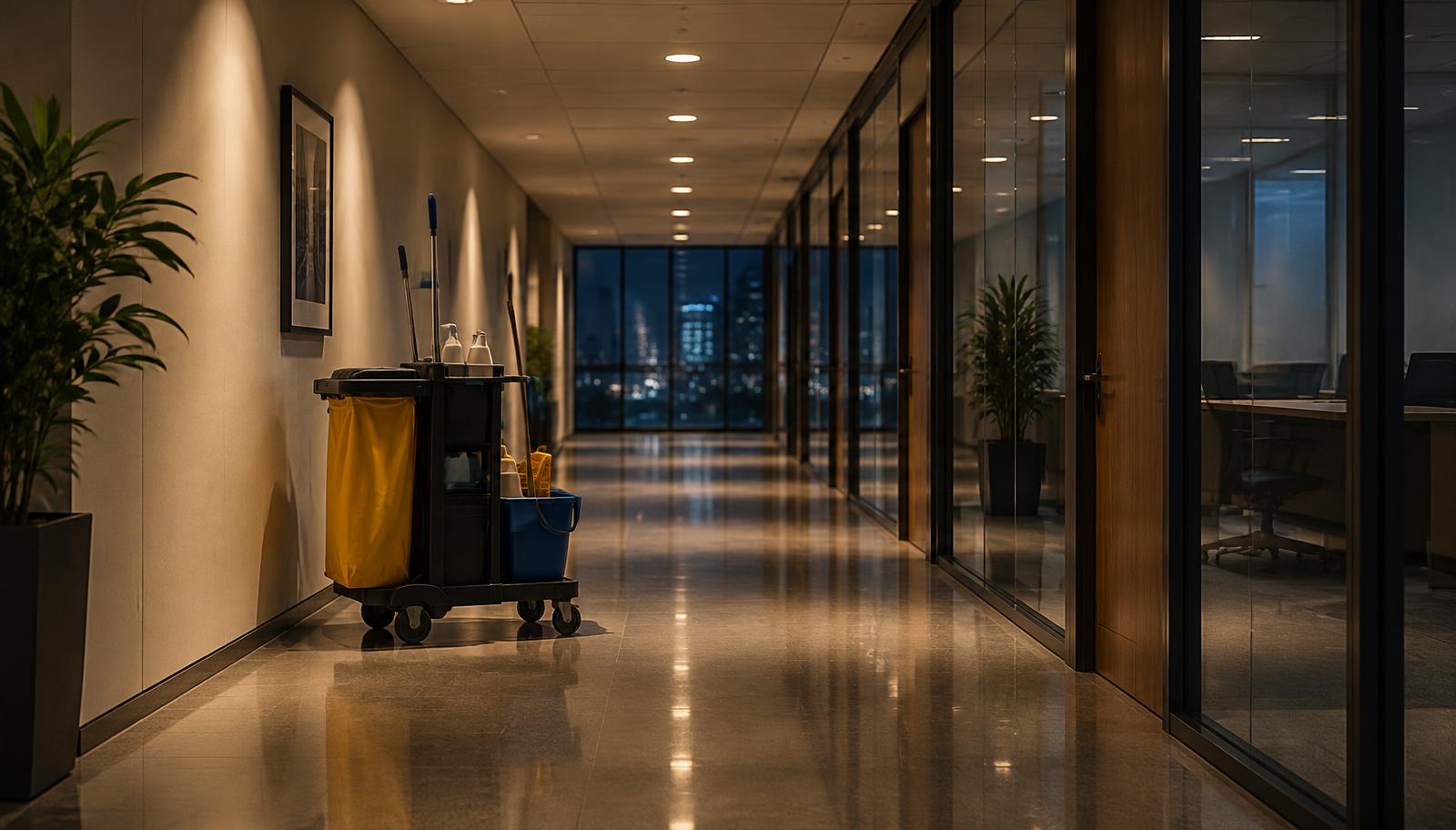
Illustration of a janitorial cart in an empty office corridor at night
Illustrative image created for this edition. It does not depict the people, places or events in the story.

Researchers at the Washington State Department of Labor & Industries interviewed 23 janitors, many of whom spend six hours or more of each shift without a co-worker or supervisor nearby. Safety+Health Magazine reported the findings on November 3.

Participants said finishing on time mattered more to supervisors than finishing safely, and that workloads often exceeded what the shift allowed. Rushing left some with headaches and others feeling worried, tired or low. Several said raising a problem sometimes led to fewer hours rather than more help.

One finding stands out for its simplicity: small words of encouragement made a real difference, yet participants said they rarely heard them from supervisors, clients or the public. Workers with limited English reported feeling especially unseen.

The researchers point employers toward a "psychological safety climate": asking whether health comes before speed, and whether workers can talk openly about problems.

Why it matters: Night and solo cleaning is standard in office buildings on both sides of the border. Realistic task lists, a check-in routine and a supervisor who actually says "good work" cost very little.

Around the World

Tokyo office tower tests a Swiss robot built to clean restrooms

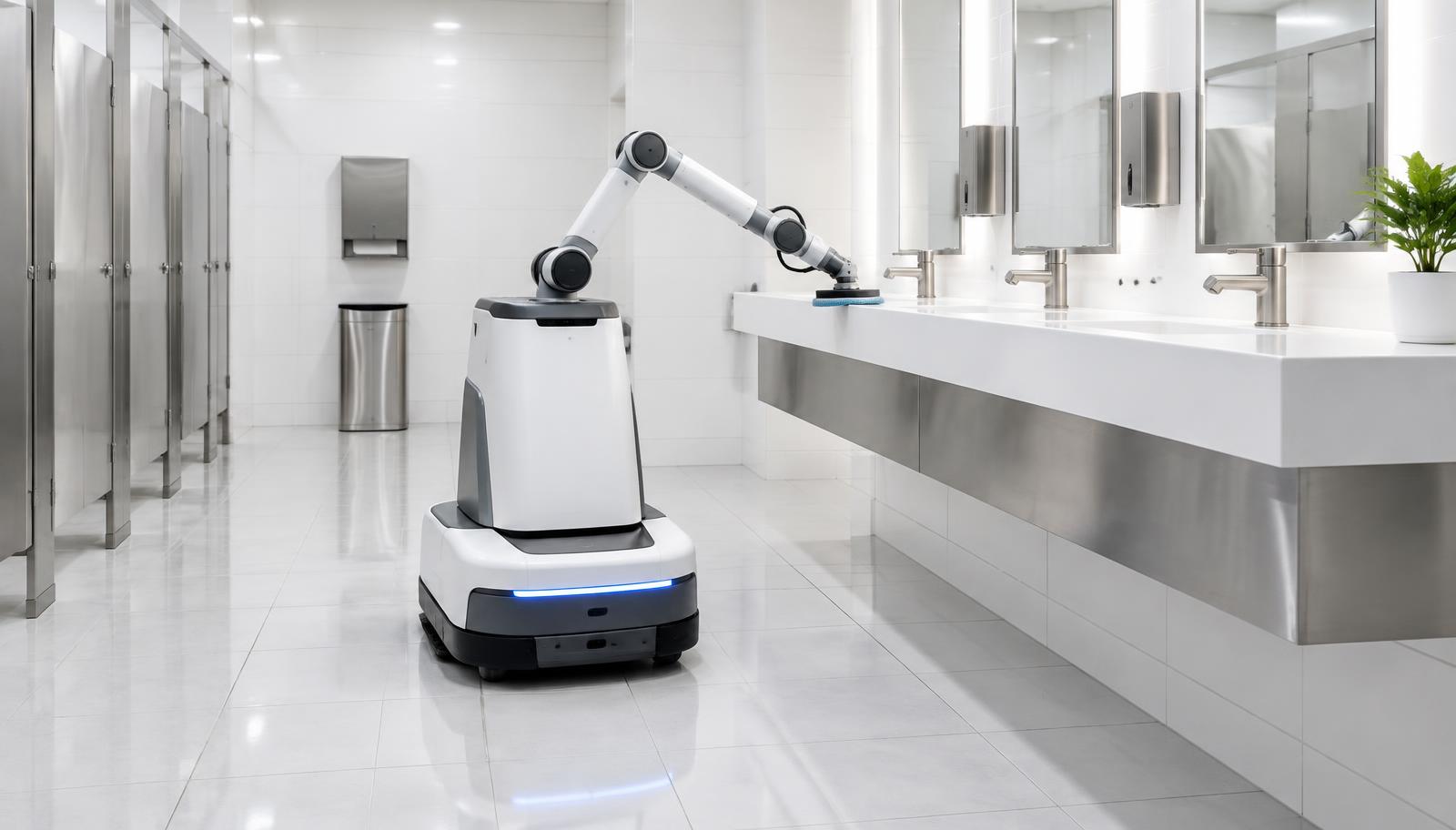
Illustration of a generic cleaning robot wiping a restroom counter
Illustrative image created for this edition. It does not depict the people, places or events in the story.

This announcement was published on August 24, 2026. We chose it because the trial is ongoing and no more recent international story offered as much practical value this week.

Japanese developer Nippon Steel Kowa Real Estate and AI firm JDSC have begun testing Loki, a restroom-cleaning robot made by Switzerland's Loki Robotics, in one of the developer's own office buildings. SoftBank Robotics is supplying the robot and remote operations under a memorandum of understanding.

The companies say it is the first trial of Loki in a Japanese office building. Their announcement is direct about the reason: building-maintenance labour is getting scarce, and washrooms are among the most demanding areas to staff.

The first phase is not about replacing anyone overnight. It tests whether the robot suits Japanese restroom fixtures and cleaning standards, and designs the practical details: schedules, what happens when something goes wrong, and which tasks stay with people.

Why it matters: Floor-scrubbing robots are already common. Restrooms are a much harder test, and how this trial divides work between people and machines is worth watching.

The Human Side of Cleaning

Twenty years, 2,225 patients: the volunteer cleaners who show up when cancer does

Illustration of a tidy, sunlit living room with flowers and a cleaning caddy
Illustrative image created for this edition. It does not depict the people, places or events in the story.

When someone is going through cancer treatment, a vacuumed living room is not a luxury. It is one less thing. That is the idea behind Cleaning for a Reason, an ISSA Charities program that arranges free home cleaning for patients.

This year marks 20 years of the program in Canada. Since 2006, it says, it has helped 2,225 Canadian patients and donated more than $725,860 in cleaning services.

In 2026, 25 volunteers from Bunzl Cleaning & Hygiene locations joined ISSA Canada and other industry partners for volunteer days in Toronto, Edmonton, Vancouver and Montreal, cleaning the homes of 20 patients and their families. The announcement came from Burlington, Ontario, on November 2.

It is a reminder that the skills cleaners use every shift (noticing what others miss, leaving a space calmer than they found it) mean something very different when the person living there is exhausted.

Cleaning Tip of the Week

Vacuum the mat before you mop the salt

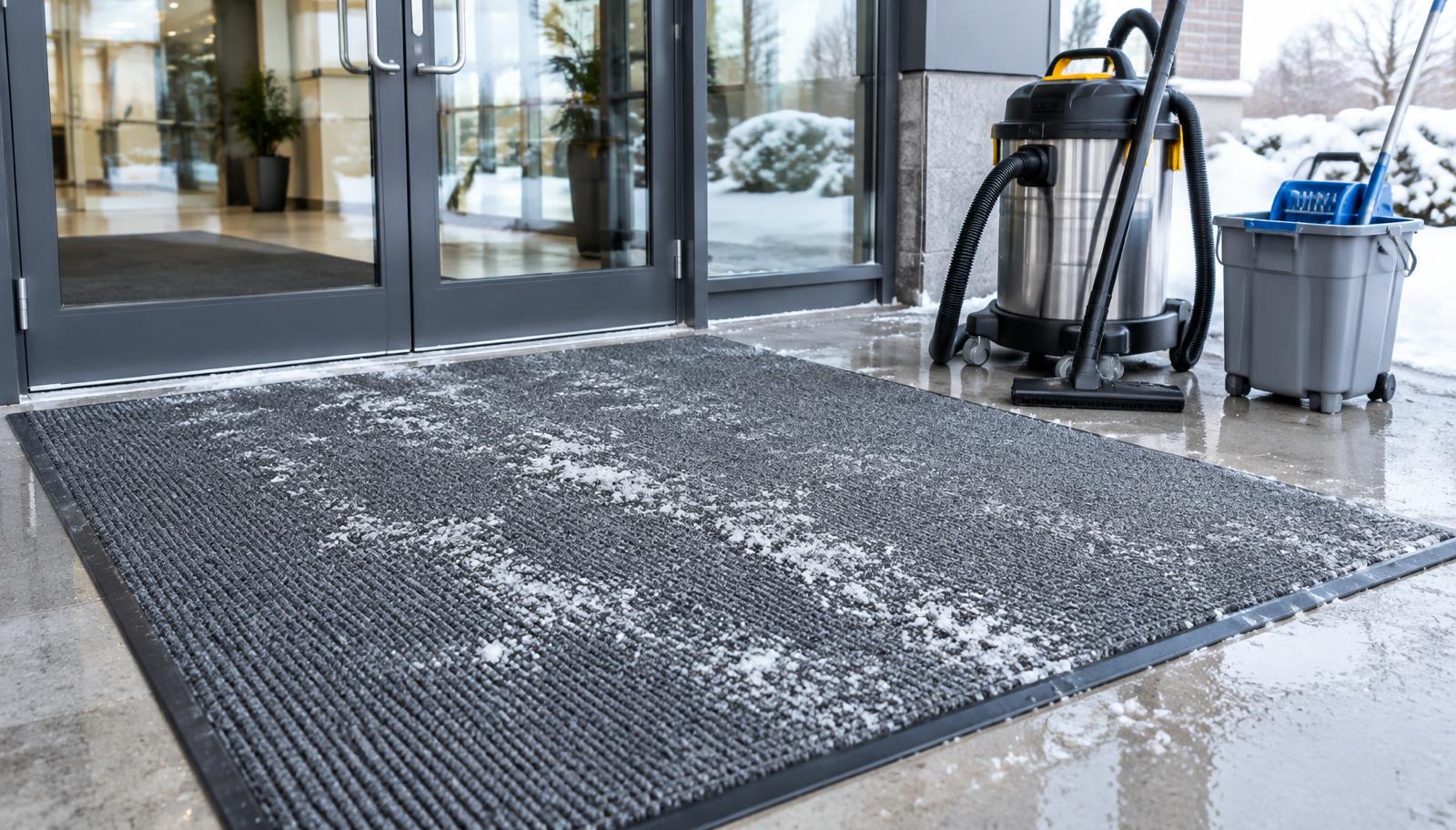
Illustration of a salt-covered entrance mat with a wet-dry vacuum and mop bucket
Illustrative image created for this edition. It does not depict the people, places or events in the story.

What to do: At winter entrances, extract or vacuum the walk-off mats first, then clean the hard floor beyond them with a neutral or salt-neutralizing cleaner.

How: Lift dry grit with a wet-dry or upright vacuum, working along and across the mat. If the mat is saturated, extract the water before moving on. Then damp-mop the first several metres inside the door, changing solution as soon as it turns cloudy.

Why it matters: A full mat stops trapping grit and starts spreading it. Every footstep then carries salt deeper into the building, where the white film dulls finishes and makes floors slippery.

Common mistake: Mopping the hard floor while the mat is still soaked. Within an hour, the residue is back.

From the Arelli blog this week

Stories are summarized in our own words from the linked original reporting and announcements; please read the sources for full details. Images are illustrations, not photographs of the events described.

Consumer Choice Award 2026 — York Region, 4 Year Winner