Overview
Issues That Make High Dusting Essential for Your Facility
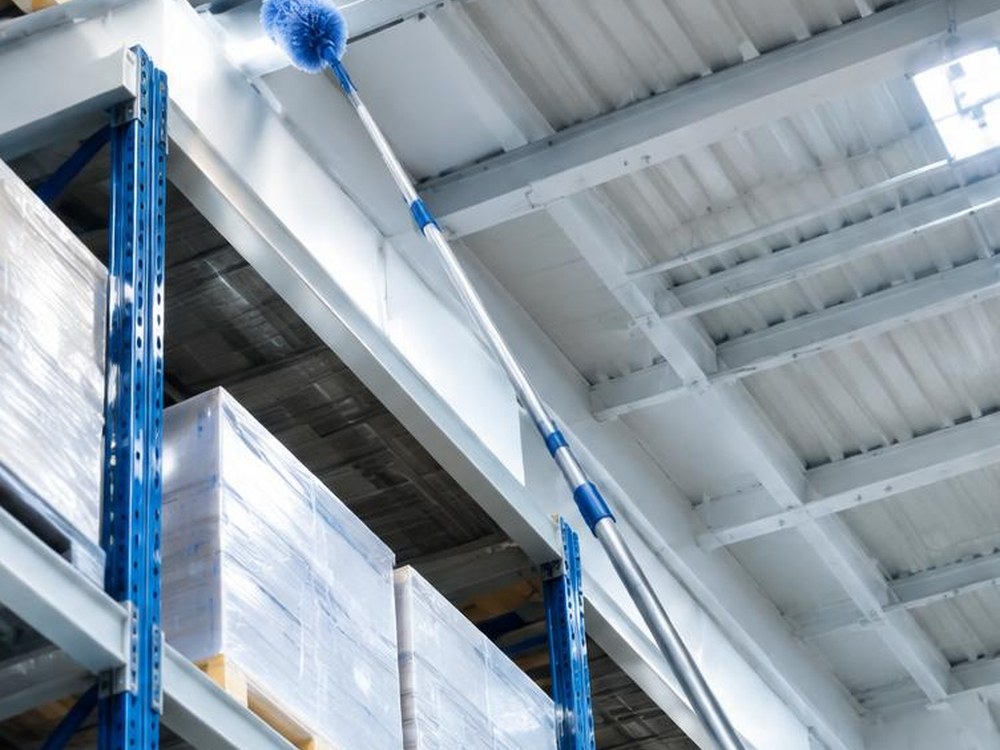
Home Dust accumulation in elevated spaces often builds up silently until it starts affecting the entire workspace. Beams, vents, ceiling tiles, equipment piping, fixtures, and high ledges collect static-charged debris that gradually settles onto desks, floors, and machinery below. As layers grow thicker, they become harder to remove and contribute to poor air quality, visible dirt, and even fire risks near electrical components. Facilities without a high-dusting routine often find that dust drifts back onto freshly cleaned surfaces, causing recurring complaints, rework, and frustration. Standard cleaning tools simply can’t reach these areas safely or effectively.
Typical issues include Why High Dusting Protects Air Quality and Building Safety
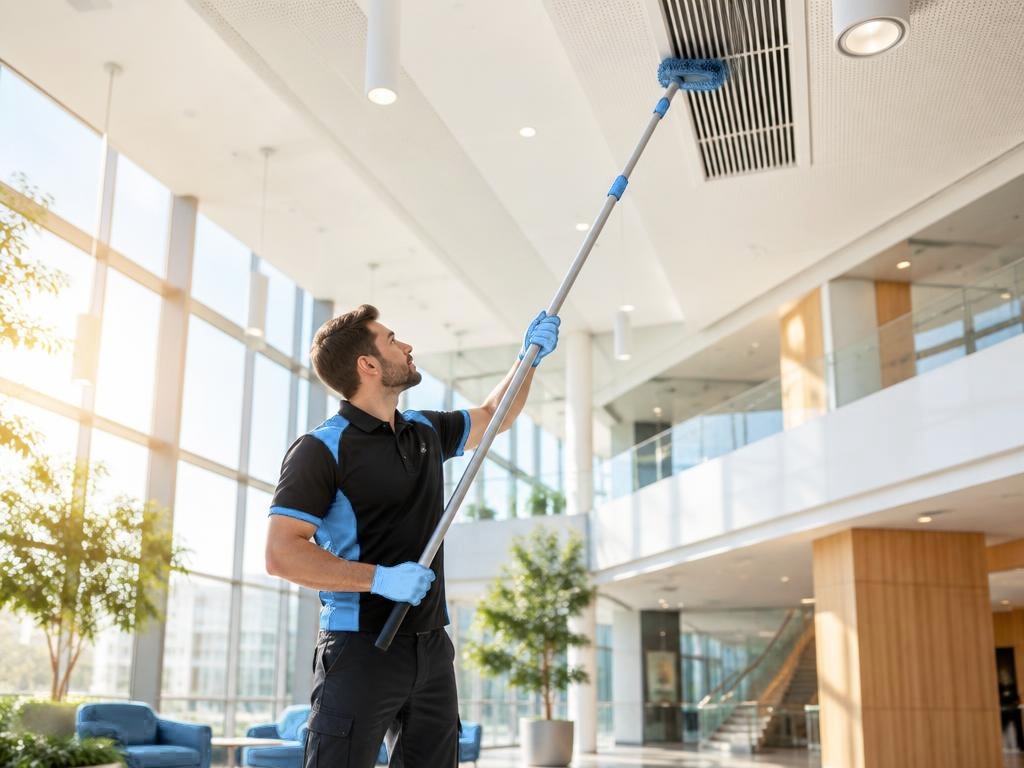
Arelli’s high dusting services solve these issues by combining trained technicians, proper safety measures, and HEPA-filtered equipment designed for elevated surfaces. Teams use extension tools and material-appropriate methods to capture dust at the source rather than spreading it back into the environment. Reliable scheduling and structured workflows ensure problem areas stay under control, helping facilities maintain cleaner air, reduce allergens, protect equipment, and present a noticeably fresher workspace.If these challenges sound familiar, high dusting can help your facility stay cleaner, safer, and easier to maintain.Call us today to discuss your high dusting needs.High dusting doesn’t only enhance appearance; it directly supports indoor air quality. Dust from elevated surfaces eventually settles into work areas, increasing the circulation of allergens, bacteria, and fine particles. In industrial and commercial settings, buildup on vents, pipes, and electrical fixtures may also create fire risks. By regularly removing dust from ceilings, beams, vents, cable trays, and overhead conduits, facilities prevent contamination from spreading and promote a healthier, safer workspace.
Improve Air Quality With Professional High Dusting Identifying High-Level Surfaces That Require Regular Dusting
For organizations prioritizing compliance, safety, and employee wellness, ongoing high dusting is essential—not optional. Reduce allergens and airborne particles that impact staff comfort and safety.
Many elevated surfaces are overlooked during daily cleaning. Facilities often miss areas such as:
Identifying these high-accumulation points helps prevent dust from spreading back onto desks, products, and equipment. Proper inspection ensures no high-level area is forgotten during maintenance routines.
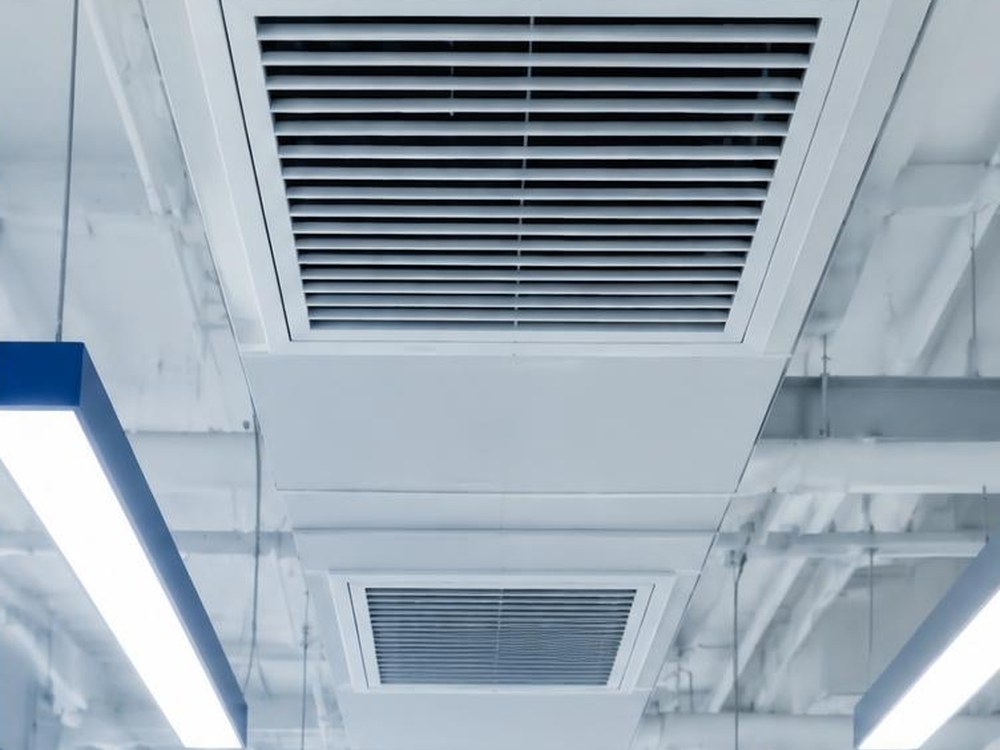
Ventilation ducts and HVAC diffusers
Ceiling corners and exposed beams
Light fixtures and electrical boxes
Cable trays, piping, and overhead conduits
Warehouse shelving tops
Mezzanine railings and structural supports
Tools, Equipment, and Techniques for Safe High Dusting Reducing Allergens Odours, and Airborne Irritants Preventing Dust From Reaching Products Equipment, and Work Surfaces Special Considerations for Industrial and Warehouse
High dusting requires more than a ladder and a cloth. Professional results rely on:These tools help reach heights safely while preventing dust from becoming airborne. Using the proper techniques ensures dust is captured at the source without contaminating the rest of the facility.High dusting directly improves the health of indoor environments. Dust trapped on overhead fixtures often contains allergens, bacteria, and fine particulates that circulate through the air. When left untreated, these particles contribute to respiratory irritation, unpleasant odours, and dust settling back onto work surfaces even after cleaning. Regular high dusting reduces airborne irritants and supports better indoor air quality—especially important for offices, schools, healthcare environments, and production areas where air purity affects both comfort and performance.Dust accumulation at elevated levels eventually drifts down onto sensitive equipment, product shelves, packaging areas, and workstations. This can affect inventory cleanliness, contaminate production lines, and disrupt the appearance of customer-facing spaces. High dusting stops these particles at the source and helps maintain consistent cleanliness throughout your facility. Proper dust control is critical for warehouses, retail environments, and manufacturing operations where product integrity matters.Larger facilities face unique high-dusting challenges. Exposed beams, rafters, tall shelving, and equipment installations collect heavier dust loads over time. Industrial settings often involve machinery-generated dust or airborne debris that adheres to overhead surfaces. Safe high dusting in these environments requires:
Trained technicians
Proper lift operation
Safety harnesses and PPE
HEPA vacuum systems for heavy particulate removal
Controlled dust capture to prevent fallout
The Importance of Scheduled High Dusting for Long-Term Cleanliness Why GTA Facilities Trust Arelli for High Dusting
These specialized approaches protect both workers and equipment while ensuring deep, effective cleaning.High dusting is not a one-time task—it’s an essential part of a long-term maintenance plan. Dust returns quickly to elevated areas, especially in high-traffic or industrial spaces. Establishing a regular high-dusting schedule ensures your facility stays clean, safe, and visually appealing throughout the year. Routine services also reduce strain on HVAC systems, minimize airborne contamination, and help preserve building finishes.Arelli Cleaning delivers reliable high dusting services backed by trained technicians, commercial-grade tools, and strict safety standards. Our non-franchise model ensures consistent, high-quality work from teams familiar with your facility’s unique needs.
Keep Your Facility Cleaner From Top to Bottom FAQs
Whether your space requires occasional deep cleaning or ongoing scheduled maintenance, we keep elevated surfaces clean and your environment healthier.Prevent dust buildup with scheduled high dusting for any facility size.High Dusting Facility Supplies FAQs
Answers to the most common questions businesses ask before choosing Arelli
Ready to Improve Air Quality and Reduce Hidden Dust?
The ideal frequency depends on the environment. Office spaces may require high dusting quarterly, while warehouses, industrial facilities, or areas with active HVAC systems may need monthly or bi-monthly service. Regular scheduling prevents dust from accumulating and drifting down onto work surfaces.High dusting typically covers elevated surfaces such as beams, rafters, vents, piping, cable trays, HVAC diffusers, light fixtures, shelving tops, ceiling corners, and other hard-to-reach structures. Any elevated surface that collects dust can be included.Yes. Professional technicians use HEPA vacuums, microfibre tools, and controlled dust-capture methods to prevent fallout onto equipment or production lines. Proper safety procedures ensure sensitive environments remain protected throughout the process.Technicians use extension poles, specialty attachments, HEPA-filtered vacuums, microfibre dusters, safety harnesses, and lift equipment when needed. These tools allow for safe, effective dust removal at elevated heights.Absolutely. Removing dust from overhead structures prevents particles from circulating through the air or settling onto surfaces. This reduces allergens, irritants, and airborne debris, resulting in a healthier workspace.Protect your workplace with safe, professional high dusting services.