School and training-centre cleaning in Toronto should follow a written, room-by-room checklist that assigns tasks, timing, products and responsibility around actual class use. Start with daily cleaning and disinfection of indoor high-touch surfaces, then add classroom resets, washroom checks, floor care and separate procedures for specialized teaching spaces. A useful checklist also defines what is included in the cleaning contract and who responds while students are on site.
Key takeaways
- Schedule cleaning around class changes and evening sessions, not just office hours.
- Separate routine cleaning, disinfection and specialized equipment care in the scope.
- Use Toronto Public Health guidance as a local baseline, not a complete school or outbreak protocol.
- Assign responsibility for shared washrooms, daytime spills and classroom equipment.
- Compare quotes against the same rooms, tasks, frequency and access conditions.
Build the checklist around the teaching day
A Toronto language school with evening classes has a different cleaning pattern from a tutoring centre that gets busy after school. An adult training centre may alternate quiet hybrid-learning days with crowded assessment sessions. Cleaning the same rooms in the same order regardless of attendance can leave the busiest spaces underserved.
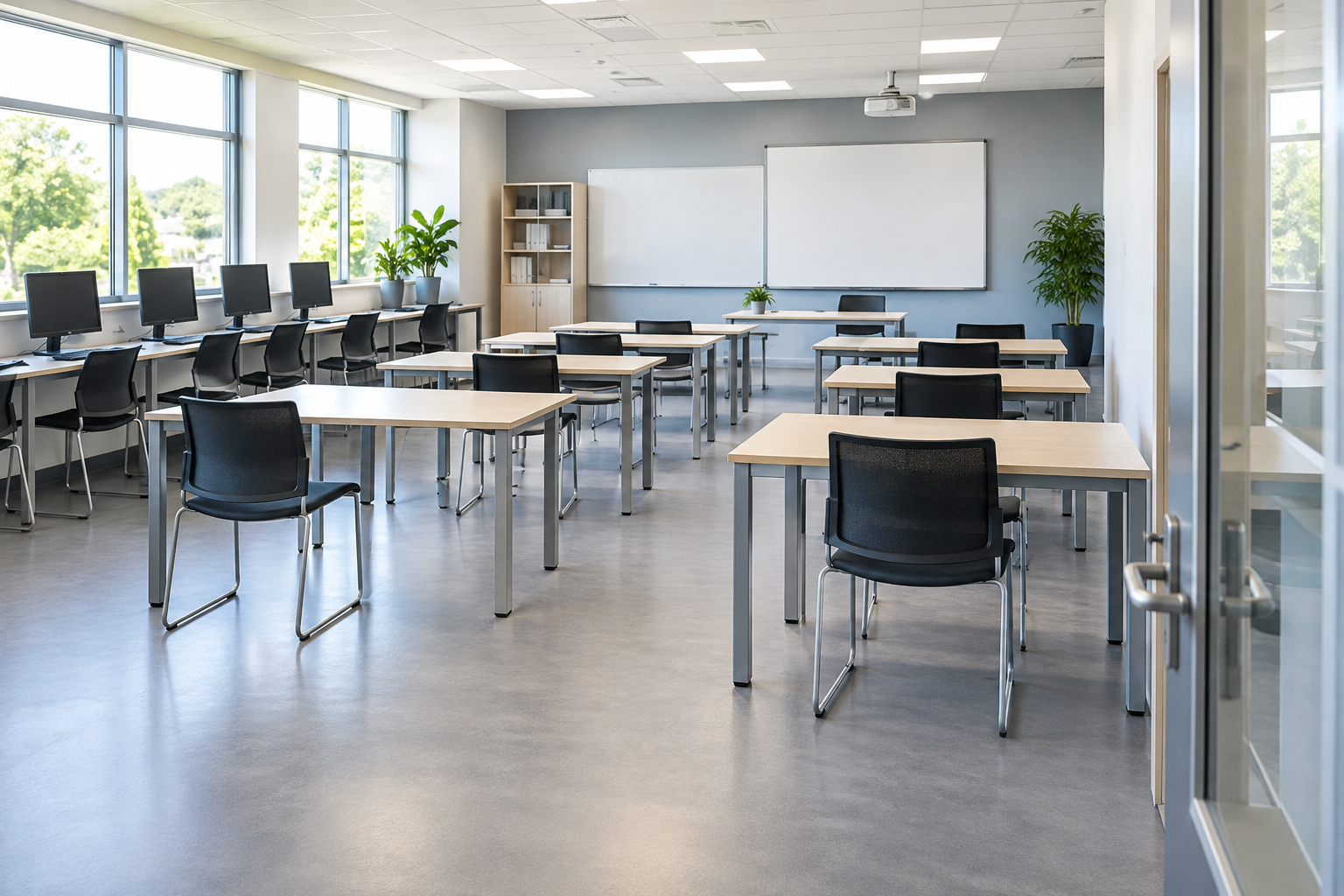
Start with a floor plan and timetable. Mark classrooms, reception, washrooms, eating areas, computer stations, storage and any practical instruction rooms. Record when each space becomes available and who controls access.
For each area, answer:
- What gets dirty, and which surfaces are touched repeatedly?
- When can cleaning happen without interrupting instruction?
- Who handles spills or depleted supplies between contractor visits?
- Does equipment require manufacturer-approved cleaning methods?
- Is the space controlled by the school, a landlord or another tenant?
For Toronto centres leasing space in multi-tenant buildings, the final question is important. A classroom contract may not include the building lobby, lifts or shared washrooms. Confirm those boundaries before comparing Education & Training cleaning services.
A practical cleaning checklist by area
The following is a starting schedule for general teaching spaces, not a universal legal standard. Adjust it for occupancy, age groups, activities, product instructions and applicable setting-specific protocols.
Toronto Public Health's guidance on reducing respiratory-virus spread recommends cleaning and disinfecting indoor high-touch surfaces in public settings at least daily and when visibly dirty. Examples include handles, tables, switches, sinks, faucets and electronic devices. This is a local prevention baseline, not school-specific legislation or a complete protocol for outbreaks, specialized equipment or food-service areas.
| Area | Routine checklist | Timing or escalation trigger | Responsibility to confirm |
|---|---|---|---|
| Classrooms | Remove waste, clean accessible desks and tables, address high-touch surfaces, remove floor debris | Daily high-touch baseline; inspect between groups and address visible dirt | Contractor scope versus instructor reset |
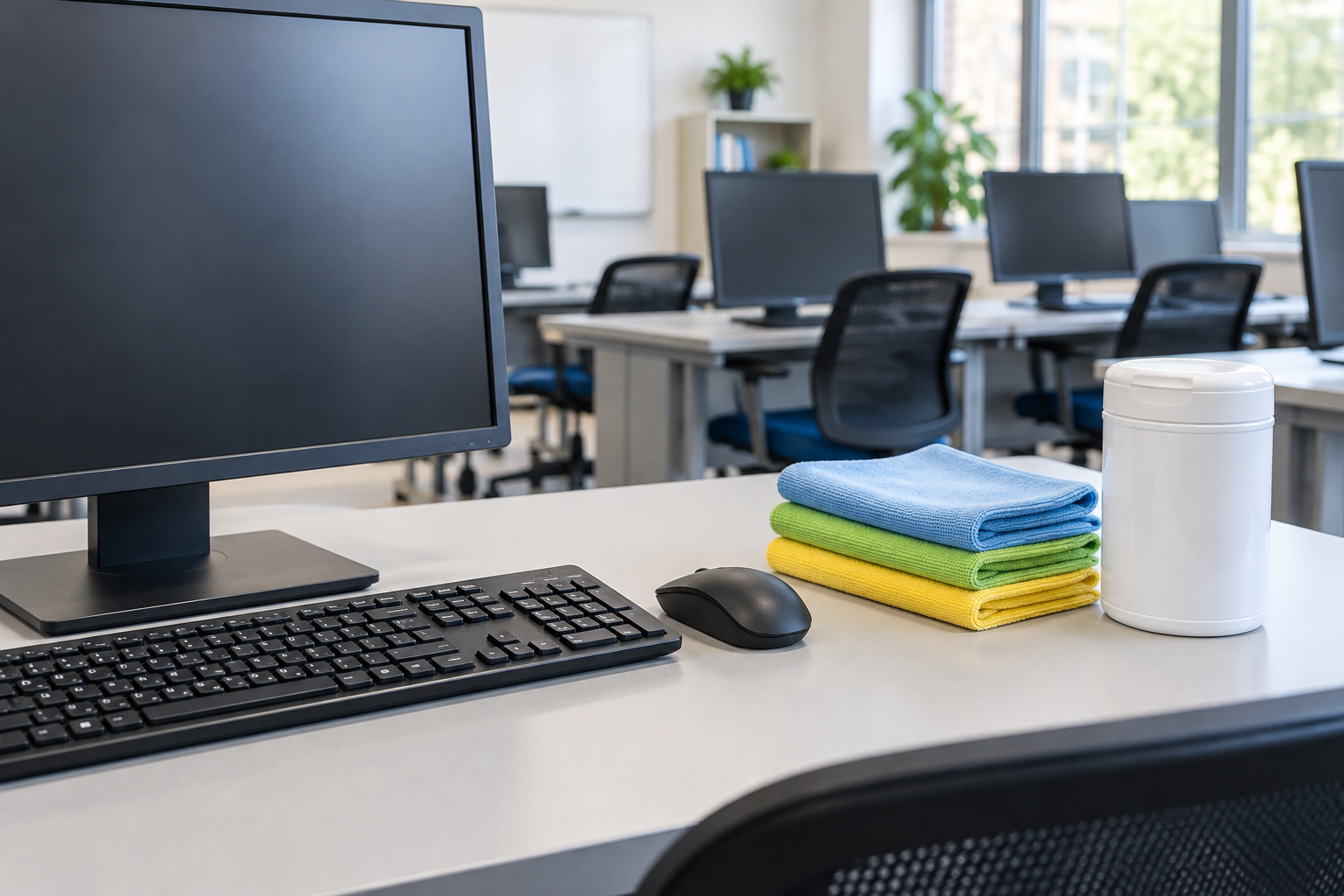
| Computer and testing rooms | Clean shared keyboards, mice, touch screens and work surfaces using compatible methods | Daily high-touch baseline; assess additional needs between users | Who handles electronics and protects exam materials |
| Washrooms | Clean fixtures and floors, disinfect high-touch points, replenish soap and paper supplies | Scheduled service plus checks during occupied hours | Daytime checks and consumable purchasing |
| Reception and corridors | Clean touch points, remove debris, inspect mats and address wet flooring | Routine service; extra checks during wet or snowy weather | Tenant versus landlord coverage |
| Eating areas | Remove food debris, clean tables and sinks, empty waste, address touch points | After eating periods as needed, plus scheduled cleaning | Staff reset versus contractor service |
| Shared teaching equipment | Clean compatible surfaces and follow equipment-specific instructions | Based on use, contamination and manufacturer guidance | Instructor, technician or trained cleaner |
| Practical instruction rooms | Follow a separate approved procedure for equipment, residues and waste | According to the activity and applicable requirements | Programme lead and qualified service provider |
A tick beside “classrooms complete” is not enough if desks were covered in student work. Include a place to record blocked surfaces, inaccessible rooms and issues needing follow-up.
Separate cleaning, disinfection and equipment care
Cleaning removes dirt and residues. Disinfection uses an appropriate product to address microorganisms on suitable surfaces. They are related tasks, but the words should not be interchangeable in a service agreement.
Remove visible dirt before disinfection. Follow the product label for preparation, application, required wet contact time and any subsequent steps. For electronics, use manufacturer-compatible products and methods rather than assuming the general classroom product is suitable.
Contact time belongs in the work plan
Disinfectant contact time is the period a treated surface must remain wet. There is no single contact time that applies to every product, so a quick wipe is not automatically a completed disinfection task.
The Northwestern Health Unit's school and child-care cleaning guidance is useful for planning responsibilities, staffing, products, signage, PPE and chemical safety. It comes from northwestern Ontario, not Toronto legislation; child-care-specific tasks and frequencies should not automatically be transferred to adult training centres. Product instructions determine dilution, contact time and handling.
Practical instruction needs a separate scope
An ordinary classroom checklist should not silently expand to cover a teaching kitchen, clinical simulation room or trade workshop. Equipment, contaminants and waste may require different procedures, training or specialist support.
Document what routine cleaners can touch, what instructors must prepare and what remains excluded. Discuss specialty cleaning requirements separately rather than treating “deep cleaning” as an undefined catch-all.
Manage class changes, hybrid attendance and Toronto winters
The most useful cleaning frequency is tied to use. A hybrid classroom that sits empty does not need the same floor reset as a room used by successive groups, but reduced attendance should not remove necessary hygiene checks in occupied areas.
Use the timetable to identify pressure points:
- Before opening: check washroom supplies, entrances and rooms needed for the first class.
- Between groups: remove abandoned waste, inspect desks and shared equipment, and address visible dirt or spills.
- During long teaching days: check washrooms and eating areas, with a clear route for reporting problems.
- After the final session: complete the agreed classroom and common-area service without disrupting late learners.
Between-class checks do not necessarily mean disinfecting every surface after every lesson. Set additional tasks according to use, contamination and applicable protocols, while maintaining the daily high-touch baseline.
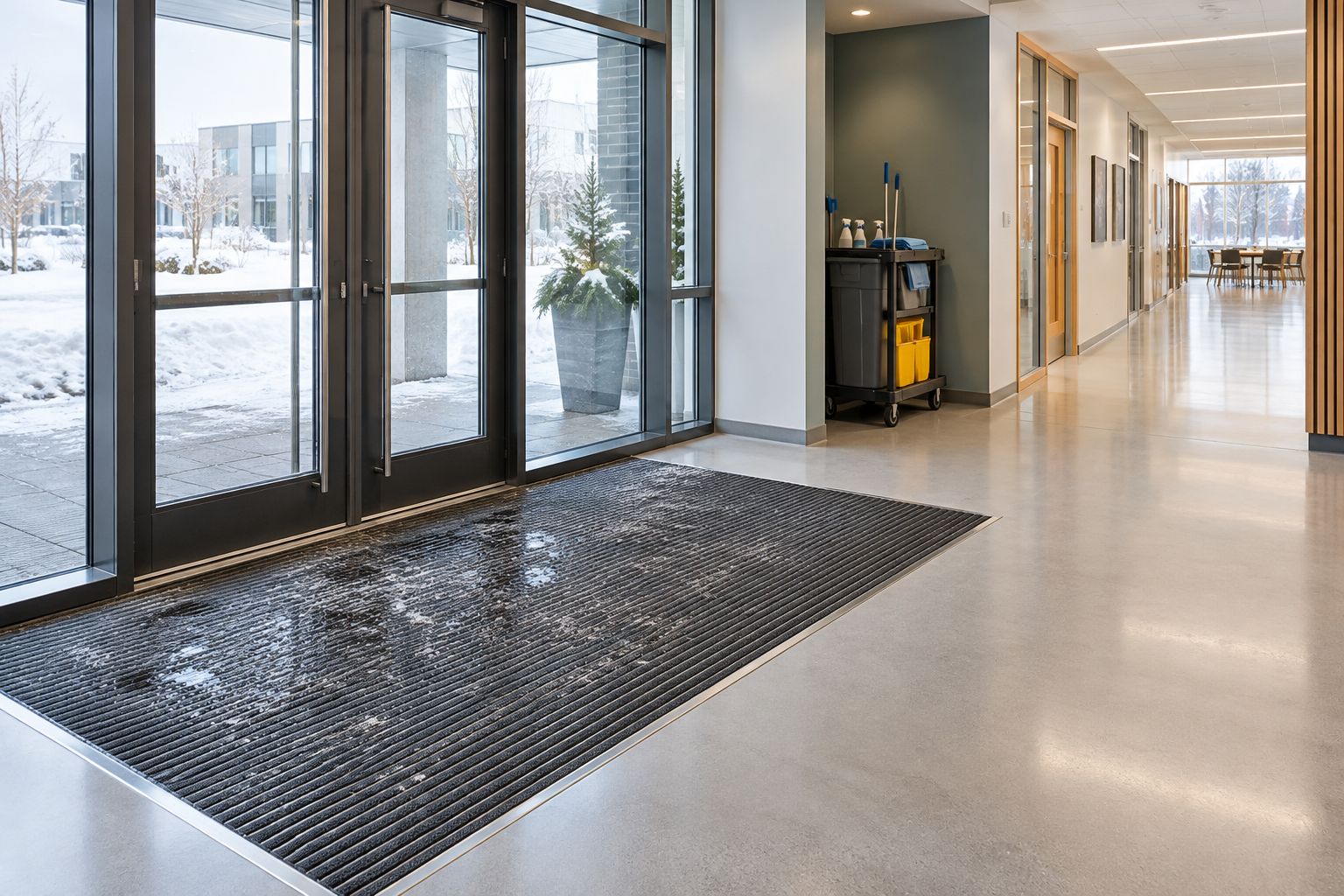
Toronto winter conditions add another operational layer. Tracked-in salt, slush and grit can build up at entrances and move into corridors. Inspect mats, remove moisture and soil promptly, and use floor-compatible methods. Keep warning signs and access controls in place while floors are wet, and avoid scheduling wet floor work across the only usable classroom route.
Define what the contractor includes—and what staff retain
A strong commercial cleaning scope names tasks instead of relying on “full cleaning” or “school standard.” It should distinguish scheduled cleaning from daytime response and periodic work.
Put these items in writing
- Rooms and accessible surfaces included in each visit.
- High-touch cleaning and disinfection tasks.
- Washroom restocking responsibilities and who purchases supplies.
- Waste collection points and excluded waste streams.
- Floor methods and separately scheduled restorative work.
- Access arrangements, alarms, keys and room lock-up.
- Procedures for missed access, spills, damage and concerns.
Staff should know how to leave rooms ready: clear teaching materials from desks, secure confidential records and identify equipment cleaners must not move. If cleaners cannot access a room, the handover should explain whether service is rescheduled or recorded as incomplete.
Body-fluid incidents need a designated response procedure, not an improvised classroom wipe-down. The Canadian Centre for Occupational Health and Safety's guidance for cleaning staff recommends touch-point checklists, completion records, training, suitable PPE and review of labels and available safety data sheets. Its body-fluid guidance includes avoiding direct contact, containing contaminated cleaning materials, cleaning and disinfecting reusable tools, and washing hands after glove removal.
This Canadian guidance is not legislation and excludes specialized environments such as health care and food processing. Apply it to general classrooms and common areas, with separate procedures and applicable waste-disposal requirements for specialized instructional spaces.
Assess green products without weakening hygiene
Ask what “green cleaning” means in the proposed service. A useful answer identifies products, intended uses, dilution methods, surface compatibility and how unnecessary chemical use will be avoided.
Do not treat fragrance as evidence of cleanliness or a sustainability claim as evidence of disinfectant performance. Where disinfection is required, select an appropriate product and follow its label. Never mix cleaning chemicals.
For occupied learning spaces, discuss product sensitivities, secure storage, ventilation requirements and how work will be timed around students. Reusable tools and controlled dispensing can support waste-reduction goals, but cloths and equipment still need procedures that prevent contamination moving between areas.
Compare costs and providers using the same scope
School and training-centre cleaning costs depend on square footage, service frequency, traffic, washroom count, flooring and special requirements. Evening access, short classroom turnover windows, equipment restrictions and periodic floor care can also affect the work involved.
Before requesting quotes, share the same floor plan, timetable and checklist with each provider. Clarify whether consumables, daytime visits and periodic tasks are included. The cleaning pricing guide explains general cost drivers; a training facility still needs a site-specific assessment.
Ask potential providers how they train staff, verify completed tasks and resolve missed work. A documented concern should identify the room, issue, responsible person and follow-up—not disappear into an informal message chain.
Arelli uses local crews rather than a franchise model and offers an app for reporting concerns and following up. Its client care support is available 24/7; confirm on-site attendance arrangements separately from support availability. Arelli also offers Price Match on comparable written quotes and no cancellation fees.
Frequently asked questions
How often should a Toronto training centre be cleaned?
Use daily cleaning and disinfection of indoor high-touch surfaces as the Toronto Public Health baseline, including when visibly dirty. Set other tasks around attendance, class changes and room use, with additional checks for busy washrooms, eating areas and wet entrances.
What is normally included in school cleaning?
A proposed scope commonly covers accessible classroom surfaces, floors, washrooms, waste collection and common areas, but inclusion must be confirmed in writing. Specialized equipment, body-fluid response, consumables and restorative floor work should be explicitly included or excluded.
Should desks be disinfected after every class?
Not automatically: Toronto's cited public-setting guidance establishes a daily high-touch baseline, not a universal between-class rule. Inspect desks between groups and adjust cleaning and disinfection for visible dirt, use and applicable setting-specific or outbreak instructions.
Does a hybrid timetable reduce cleaning costs?
It may reduce some work if fewer rooms are occupied and the scope changes accordingly. Savings are not automatic because washrooms, entrances, daily touch-point tasks and access requirements still affect service needs.
Can the same crew clean classrooms and specialized teaching rooms?
Possibly, but only when the scope, training, products and equipment procedures suit each space. Do not assume general classroom cleaning covers clinical, food-service or industrial instructional activities.
How do we choose a Toronto education cleaning provider?
Look for a provider that can work around your timetable, explain product use and document completion and follow-up. Compare education and training cleaning options against the same checklist rather than choosing on an undefined service description.
Get a free sample clean
Bring your timetable, room list and current cleaning concerns to the walkthrough. Arelli offers a free 45-minute sample clean before you commit, so you can assess an agreed area and discuss the scope. Book a free sample clean for your Toronto school or training centre.
Arelli service for this topic
Commercial Cleaning in Toronto