Fictional scenario: This narrative is entirely hypothetical. The people, office, conversations and events are invented to illustrate decisions—not an Arelli client, service policy or measured outcome.
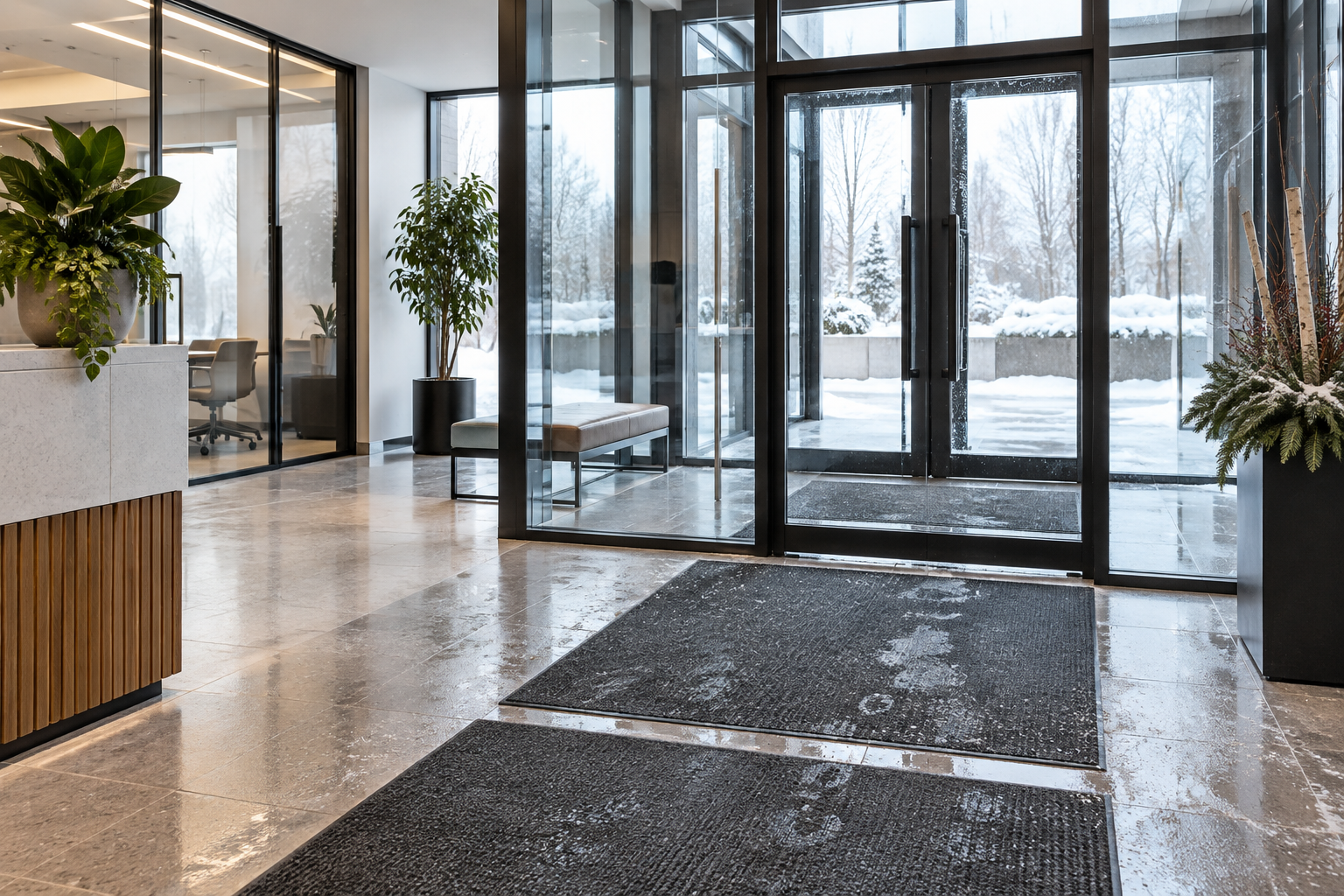
The first person through the shared-office entrance brings in slush. The next leaves damp boot prints beyond the mat. By the time Maya, the fictional coordinator, puts down her bag, a dark patch has spread beside reception.
The overnight cleaning visit is complete. The floor looked different when the cleaner left. A completed visit does not mean an entrance stays dry through arrivals. What happens next depends on who notices changing conditions, who can act and who remains responsible when the crew is elsewhere.
Respond to the condition, not the schedule
Maya could send a complaint and wait. Instead, she follows this fictional office’s hazard-response procedure: warn arrivals, restrict the affected patch where practical and contact the designated facilities person.
A warning sign is not the finished job. Moisture needs attention and occupants need a usable route. CCOHS slip-and-trip guidance recognizes wet surfaces, weather and loose mats as hazards and recommends prompt cleanup, wet-area marking and clear routes.
In this scenario, an authorized onsite employee has appropriate equipment and instructions for tracked-in water. That person removes moisture while Maya directs arrivals away. Without trained help, the response would be appropriate access control and escalation—not improvised equipment use.
The consequence is operational: someone addresses the condition rather than assuming last night’s cleaner owns every later change.
The mat needs a decision of its own
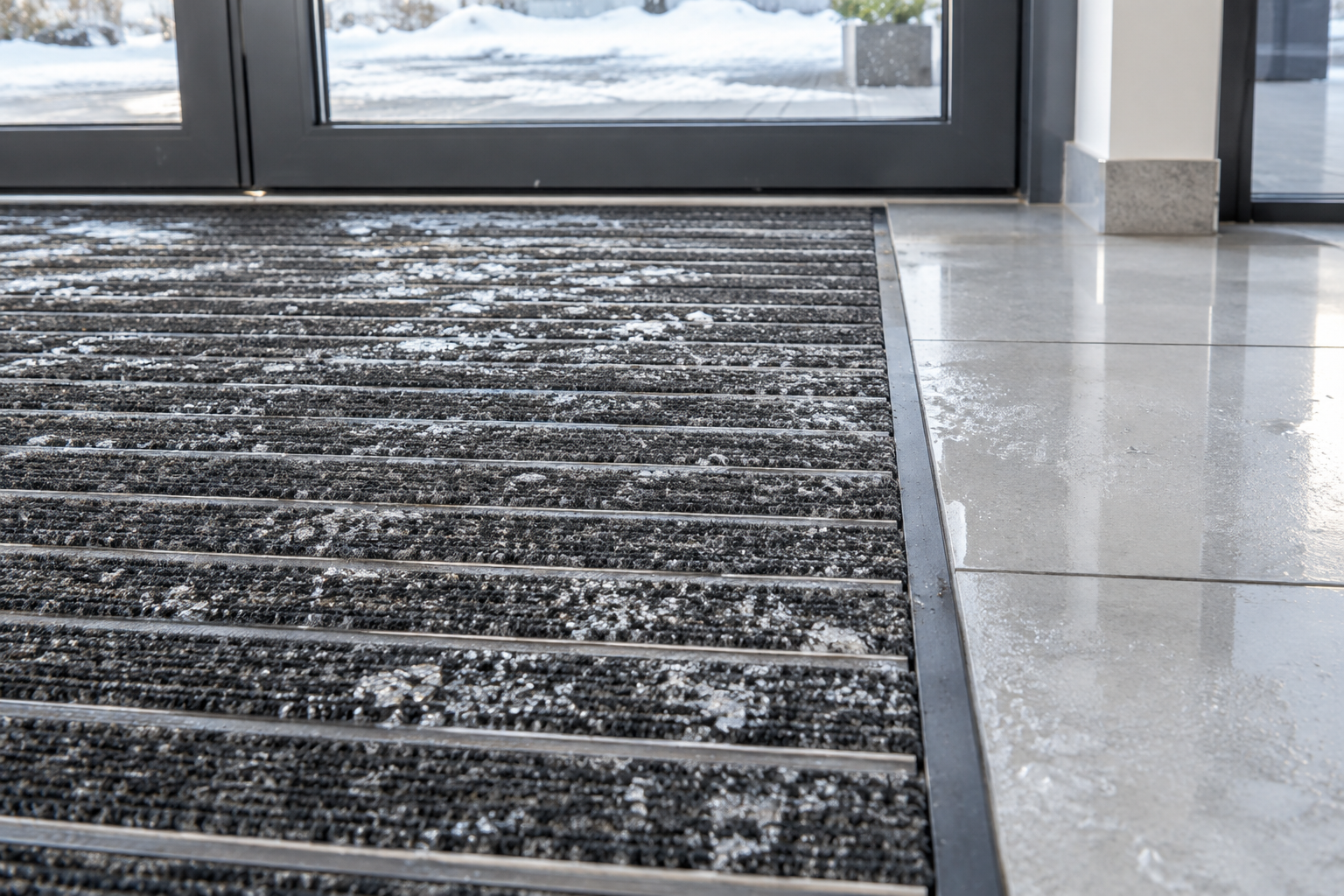
From the doorway, the mat looks tidy. Up close it is wet, and one edge no longer sits flat. Maya considers adding another mat. The facilities contact pauses: overlapping whatever is available may create an uneven walking surface.
CCOHS identifies loose mats as hazards and recommends securing mats that do not lie flat. Condition, fit and placement matter—not merely covering more floor.
This fictional office has an approved spare and a person authorized to exchange it. They remove the wet mat, check the floor beneath and place the spare flat without obstructing entry. The removed mat goes to its designated holding area, not across a corridor.
An office without a suitable spare needs another safe arrangement with management or its provider. Cleaning, replacement stock and emergency exchanges are not automatically interchangeable services. Arelli’s mat-cleaning page can start a scope discussion; it does not establish an included exchange programme.
The log reveals a gap between visits
After the immediate condition is addressed, Maya opens the log. Overnight entrance work is recorded. Nobody is identified to check the entrance after occupants arrive. Reception thought management handled it; management thought the operator did. The cleaning agreement describes scheduled visits, not continuous attendance.
No invented poor performance is needed to explain the gap. The missing piece is responsibility between visits.
CCOHS housekeeping guidance describes an ongoing operation with assigned cleanup and inspection responsibilities. Maya records the unresolved question: who is authorized, equipped and available during occupied hours?
The answer must reflect the building and agreement. It cannot simply be “whoever sees it first,” though everyone should know how to report a hazard.
A useful handover describes what remains open
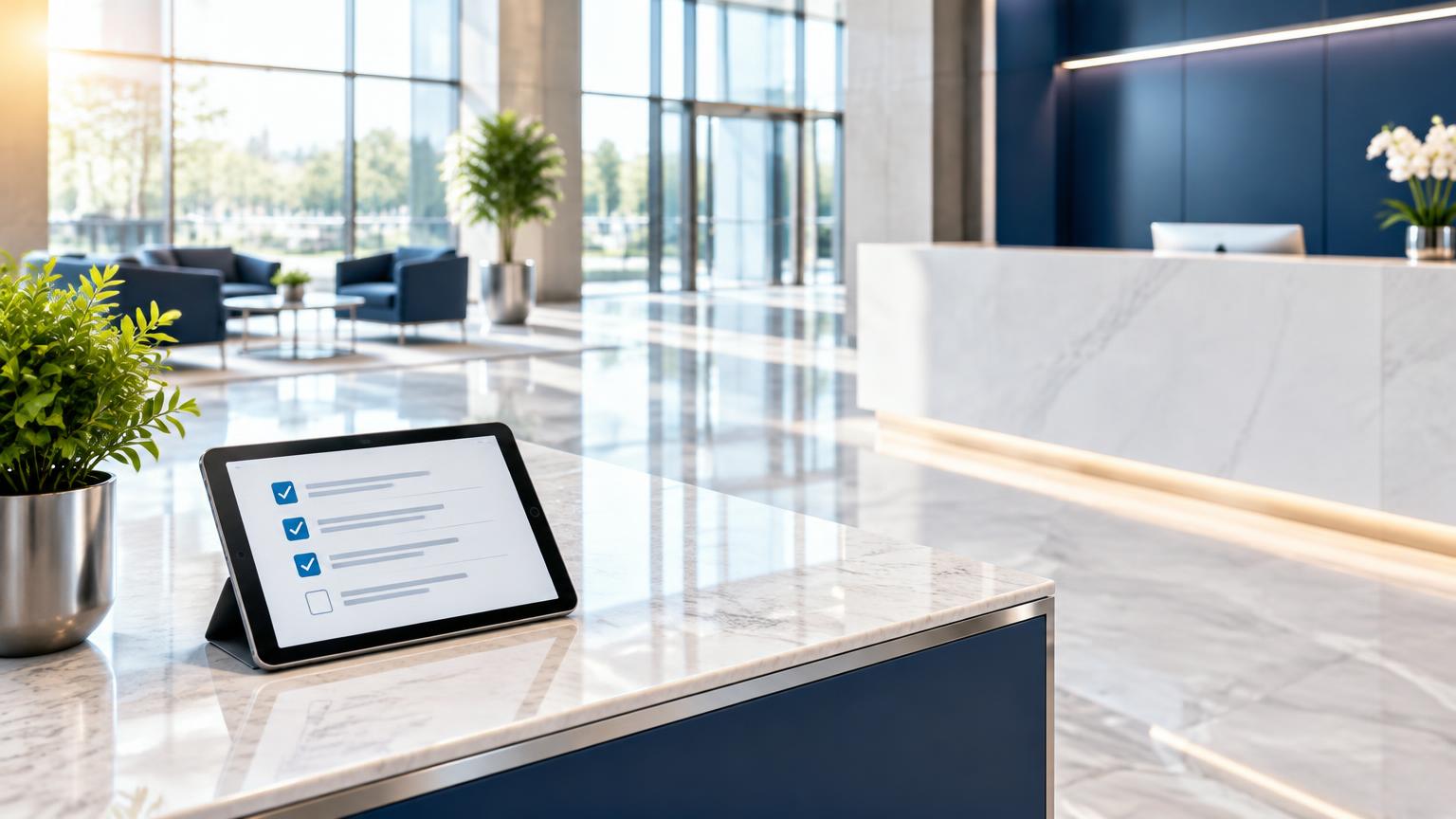
Maya replaces “Entrance needs attention” with a factual note:
- Location: Reception-side mat edge.
- Condition: Tracked-in water beyond the mat; edge not flat.
- Action: Area controlled, moisture removed and approved spare placed.
- Open issue: Confirm daytime inspection and response assignment.
- Next contact: Designated facilities contact and escalation route.
This is a proposed communication format, not a mandatory Ontario form. It lets the next person distinguish completed work from an unresolved assignment. It also avoids blame: the note does not claim the cleaner left a wet entrance when the information cannot establish that.
Shared offices need these boundaries because reception, meeting rooms and tenant suites can have different decision-makers. Shared-office cleaning information helps frame a conversation around actual zones and use.

The morning continues, so the plan continues
Another arrival brings fresh moisture. The team does not treat that as proof the response failed. Conditions are changing. The designated contact arranges further checks appropriate to weather and traffic; continuing wet-floor conditions remain subject to the response procedure.
The operator clarifies which entrance belongs to building common-area arrangements and which is in the shared-office scope. Assignments do not replace legal duties. Ontario OHSA guidance describes employer duties to inform, instruct and supervise workers and take reasonable precautions.
Maya also asks where records belong and who can close the open issue. A log is only useful if a recipient reviews it. The operator arranges to confirm responsibilities with the relevant parties rather than treating the note as a completed fix.
End with a named next step
This fictional morning ends without a performance statistic or a claim that someone prevented an accident. The narrower lesson is that the team identifies a gap, addresses an observed condition and gives unresolved work an owner.
Before the next arrival period, the operator must confirm daytime coverage, mat arrangements, reporting and escalation. That is a coordination decision, not simply a request for more overnight mopping.
If your office needs that discussion, request a quote with entrance layout, occupied hours and current gaps. Ask for proposed scope and handover arrangements in writing. The point is clarity about who acts next—not a promise that scheduled cleaning prevents every changing condition.