
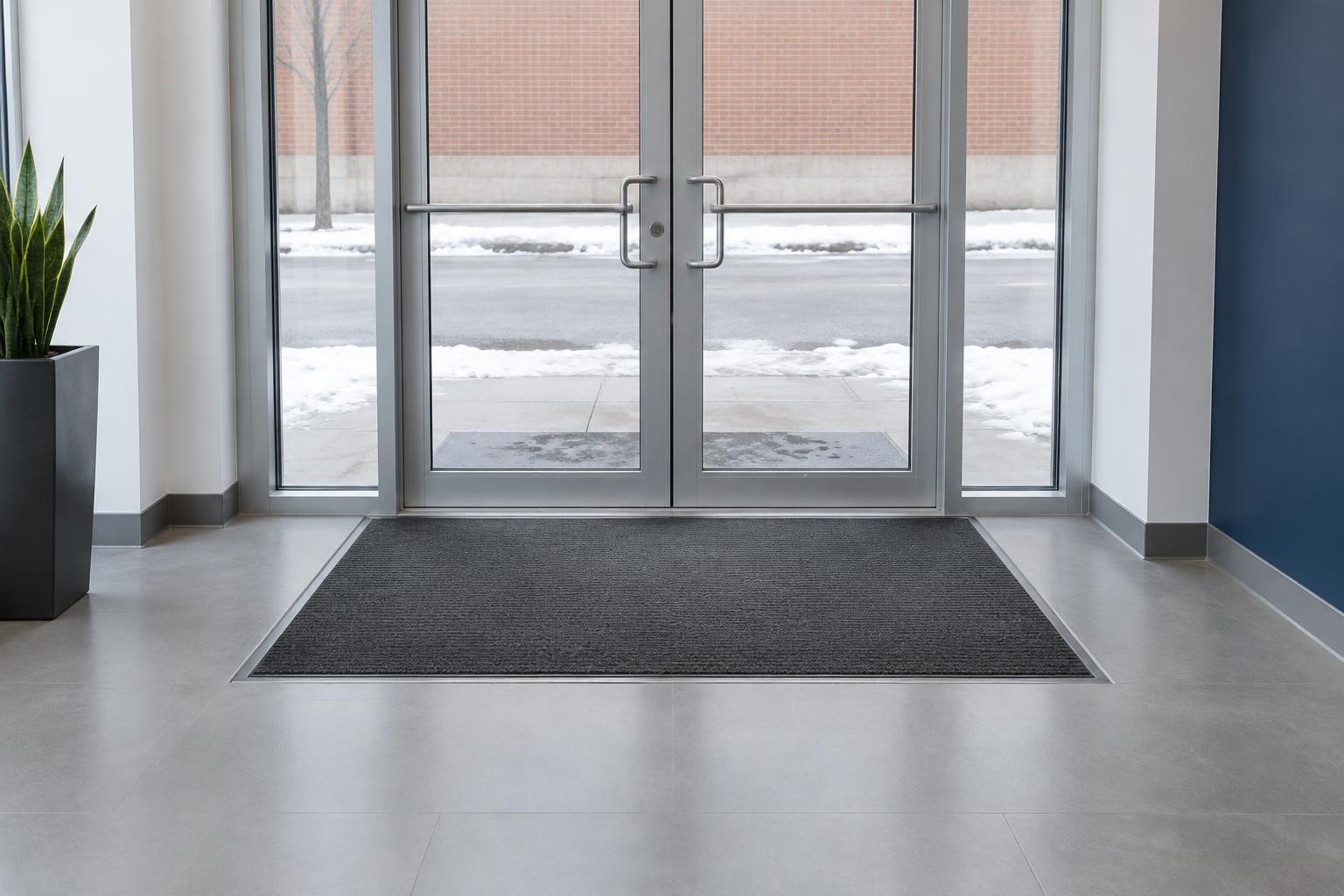
A Toronto office entrance can look clean after an evening visit and still need attention before the next one. Boots bring in moisture and grit during occupied hours. A mat shifts, a wet patch spreads beyond the entrance, or cleaning leaves a route that is not yet dry. The important question is not only “Was the lobby cleaned?” It is “Who is responsible for its condition between cleaning visits?”
A winter entrance handover connects the building's daytime response with its scheduled cleaning. It identifies the area, records what changed and names the person responsible for the next action. This guide focuses on that operational gap—not a universal chemical treatment, a promised inspection interval or a substitute for site-specific safety procedures.
Start with conditions, not just the calendar
Winter work does not arrive in tidy, once-a-day batches. The City of Toronto's description of salting and plowing operations explains that staff monitor forecasts, road conditions and pavement temperature. It also notes that ongoing snowfall can require several clearing rounds, with salt brine applied to selected roads before snow or ice.
Those municipal operations do not set a private office's cleaning schedule. They provide local context for a simple planning decision: entrance conditions can change while the building is open.
For your own site, agree which observed conditions call for a check or response. Examples might include moisture extending past the mats, visible grit along the pedestrian route or a mat that no longer lies flat. These are proposed planning prompts, not official thresholds. Set responsibilities and response arrangements according to the building's traffic, layout and procedures.
Make the entrance system part of the scope
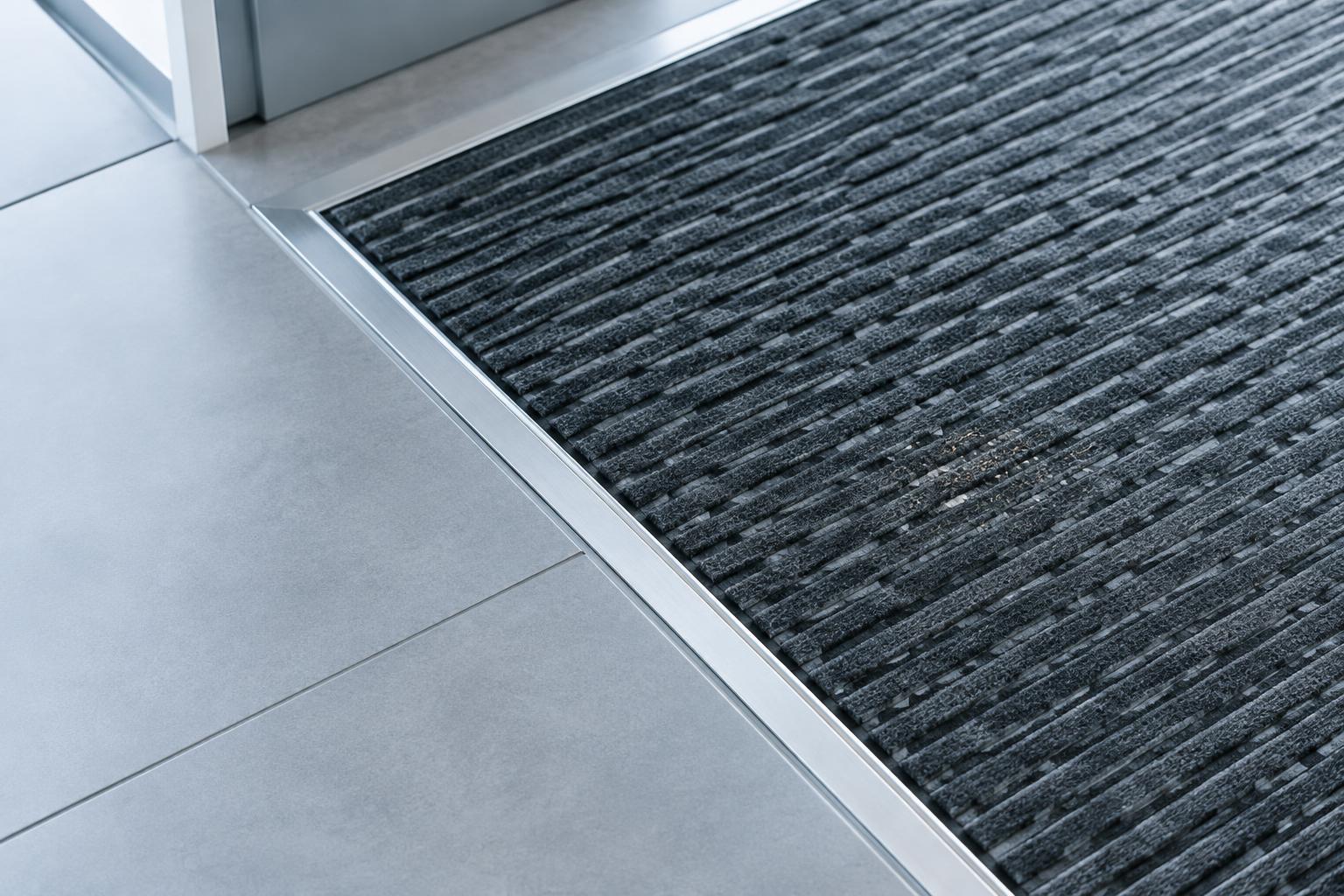
Do not reduce entrance care to “vacuum the lobby.” Identify loose mats, recessed entrance flooring, nearby carpet and the surrounding hard floor separately. Record who maintains each item and whether a rental supplier, building team or cleaning provider handles replacement or specialist care.
Forbo's care guidance for entrance flooring systems states that cleaning frequency depends on traffic volume and the level of soiling. It provides separate care guidance for its Coral and Nuway systems. The lesson is to identify the installed product and obtain its corresponding instructions—not apply a manufacturer's instructions to every mat or floor.
A useful entrance record contains:
- The entrance-system manufacturer and model, where known.
- The surrounding floor material and finish.
- The current care instructions and approved equipment.
- The agreed process for cleaning, replacement or reporting damage.
- Any task that requires separate supplier or specialist attention.
If your team cannot identify the floor or finish, resolve that uncertainty before introducing a new chemical treatment. A bottle marketed for winter residue is not, by itself, evidence that it suits the installed surface.
Separate dry-soil removal from wet-area response
The Carpet and Rug Institute's commercial carpet maintenance guidance recommends scheduled vacuuming, with more frequent attention in high-traffic areas. It also recommends mats outside and inside to intercept dirt, and prompt treatment of spots and spills with products that do not damage carpet or encourage resoiling.
For an office handover, this supports naming the entrance carpet and mats explicitly rather than treating every carpeted area as equally exposed. It does not establish that an ordinary dry vacuum can collect standing water or wet slush. Equipment and treatment must match the actual condition and the manufacturer's directions.
Divide the scope into dry-soil care, wet-area response and any planned extraction or specialist work. This prevents a vague instruction such as “remove all winter dirt” from hiding different equipment needs or responsibilities.
If you are comparing office cleaning services, ask providers to describe these entrance tasks separately from general carpet vacuuming. Agree what is included rather than assuming every response is covered by the evening visit.
Do not hand over a wet pedestrian route
Cleaning can temporarily create a hazard of its own. The UK Health and Safety Executive's guidance on cleaning and slip risks recommends leaving smooth floors dry after cleaning or excluding pedestrians until they are dry. It also describes cleaning in sections to maintain a dry route and removing warning signs when the area is clean and dry.
This is practical UK guidance, not Canadian law or proof of Ontario compliance. It highlights an important operational boundary: a warning sign is not the same as a dry, usable route.
The site's procedure should explain how the cleaning area is controlled, how people are directed around it where appropriate and who checks the condition before access resumes. A crew should not be pressured to reopen an area simply because the scheduled visit has ended.
Do not introduce an all-purpose acid or “salt neutralizer” recipe into the handover. The sources reviewed here do not establish a suitable chemical, dilution or treatment for every installed hard floor. Follow the specific floor and finish instructions and obtain clarification when those instructions are unavailable.
Use a short handover that names the next owner
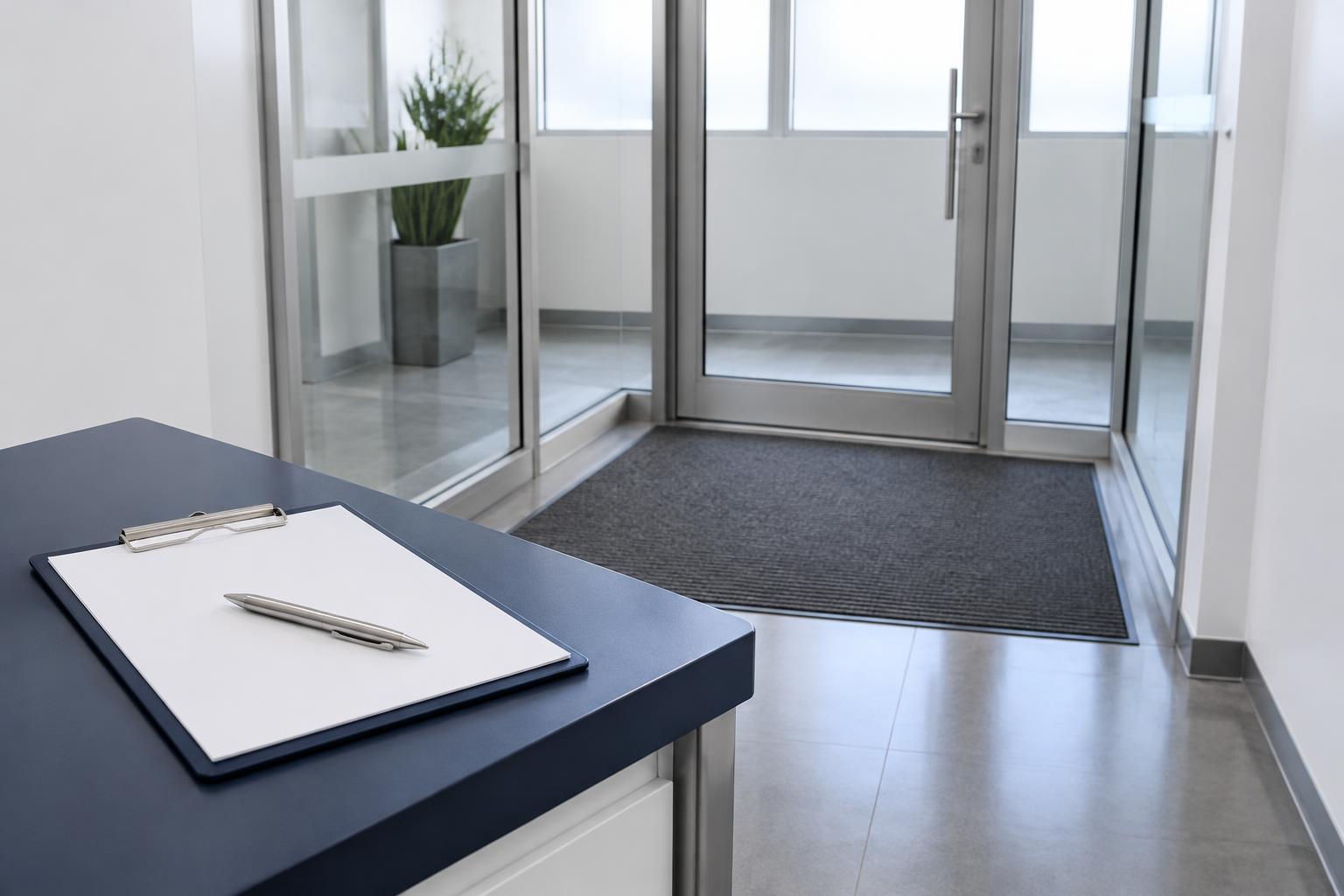
The following is an editorial planning template, not a mandatory regulatory form. Adapt it to the building's procedures.
| Handover field | What to record |
|---|---|
| Location | Exact entrance and affected area |
| Time and condition | When it was checked and what was observed |
| Action completed | Work performed using the agreed method |
| Outstanding issue | Moisture, damage, access restriction or unresolved product question |
| Next responsible person | Named role or contact under the site's arrangements |
| Next check or action | Agreed follow-up, without implying a universal interval |
For example, “Entrance checked” does not tell the next person enough. A clearer entry is: “Main entrance checked at 3:20 p.m.; wet area beside the inner mat reported; affected route remains restricted under the site procedure; facilities contact notified and follow-up assigned.” This is an illustrative record, not a claim about an Arelli client's actual conditions.
Agree these responsibilities before winter service begins. Do not assume reception staff, a landlord or an after-hours cleaner automatically owns a daytime response that has never been assigned.
Review recurring findings, not only the finished appearance
A repeated wet area may call for a review of entrance layout, mat service or responsibility between visits—not merely a longer evening checklist. Distinguish a missed agreed task from a condition that develops after the cleaner leaves.
At the review, ask:
- Were the entrance instructions available and specific to the installed products?
- Were changing conditions reported during occupied hours?
- Was the next action assigned to someone who could carry it out?
- Did restrictions remain clear until the area was ready to reopen?
- Does the agreed scope need adjusting, or does another supplier need to be involved?
These questions support a clearer service discussion. They do not promise that cleaning alone will prevent every incident or solve every building defect.
Put the handover into the proposal
When requesting commercial cleaning services, share the entrance inventory, floor-care instructions, access arrangements and daytime response plan. Ask the proposal to distinguish scheduled cleaning from additional visits, mat-supplier services and specialist floor work.
Request a site-specific cleaning quote with those boundaries documented. A workable winter plan does more than add another mop pass: it connects the condition found, the action completed and the person responsible for what happens next.