
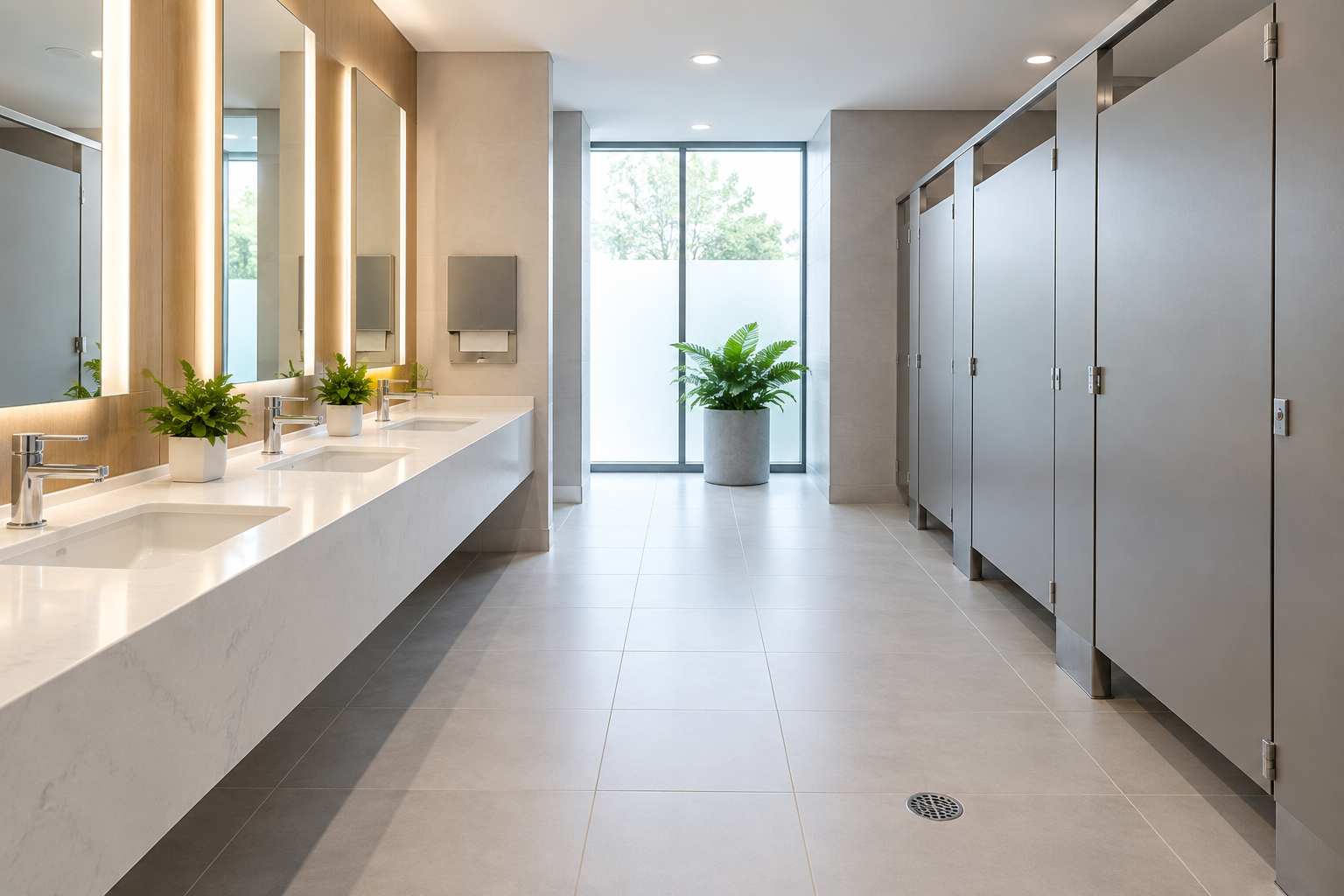
A washroom smells better after cleaning, then complaints return. The immediate reaction may be to request stronger products or more frequent visits. Neither decision explains why the odour returned.
The useful question is whether the source is accessible soil, waste, a plumbing condition, ventilation or something requiring a separate investigation. This guide helps Ontario office managers document the problem and give it to the right person without attempting hazardous repairs. It is not a plumbing inspection.
First: recognize when ordinary checks should stop
Do not continue an informal investigation where there is sewage backing up, an overwhelming unexplained odour, suspected chemical mixing or another apparent immediate hazard. Keep people away, notify building management and follow the workplace emergency procedure. Use emergency services where an immediate danger is suspected.
Do not lean into drains to smell them, enter service voids or open inaccessible spaces. A smell description alone cannot establish the source or whether an area is safe.
Never add a second chemical to “cancel out” a product already used. CCOHS explicitly warns against mixing cleaning products, including bleach with ammonia and different drain cleaners.
Problem: nobody can explain when the odour returns
Possible cause: the complaint lacks a usable pattern
“Washroom smells again” gives the next person little to investigate. A complaint after a busy lunch period may require different checks from one reported before anyone arrives.
CCOHS indoor-air guidance recommends systematic investigation, gathering information, inspecting the workplace and examining complaint patterns.
Response: record observations before changing the routine
Log the room, time and general location. Does the odour appear before cleaning, immediately afterward or later? Note recent low occupancy, visible moisture, waste awaiting collection or a reported equipment fault. Record what changed and whether it helped.
Use ordinary observations from occupied areas. Do not ask staff to trace an odour into a drain, duct or enclosed space.
Problem: the room looks clean, but accessible areas need attention
Possible cause: the scope misses a location
A visually tidy floor does not confirm that every accessible edge, receptacle or fixture exterior was included. Equally, a recurring odour does not prove the cleaner missed something.
Response: compare actual work with the agreed scope
Ask the supervisor to review accessible areas around fixtures, partition edges, waste receptacles and floor perimeters. Identify surfaces that could not be reached or safely treated. Check whether waste leaves the room and reaches the correct collection point.
Review reusable cleaning tools and their care against the contractor’s procedures. If accumulated soil needs targeted treatment, discuss deep-cleaning work. It should not be assumed to repair damaged flooring, failed seals or hidden moisture.
Problem: the odour appears after a quiet period
Possible cause: a drain’s water seal has dried out
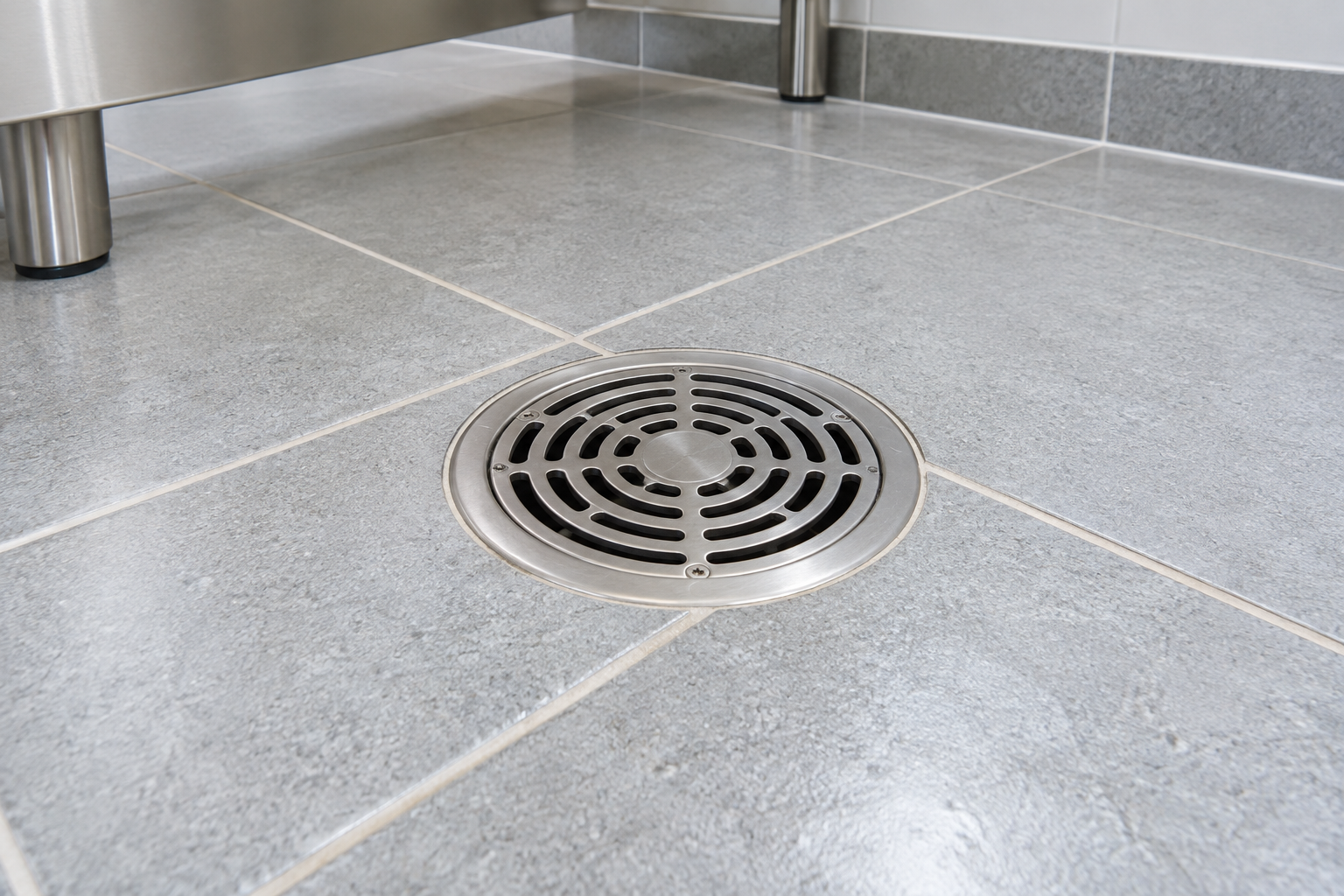
A P-trap holds water that forms a barrier against sewer gases. In a little-used fixture, that water can evaporate. South Davis Sewer District’s P-trap explanation identifies seldom-used sinks and floor drains as locations to consider.
Response: ask maintenance to identify the fixture
Tell building maintenance which room was lightly used and whether an unused sink or floor drain is present. They can confirm the drain arrangement and restore or maintain the seal through an appropriate building procedure.
Do not pour oil, deodorizer, disinfectant or drain opener into an unidentified drain. Do not remove covers or dismantle plumbing. There is no universal replenishment schedule for every office: maintenance should set the approach for the fixture and use pattern. Persistent odours require further assessment.
Problem: the odour stays near one fixture, or moisture returns
Possible cause: cleaning is being asked to solve a defect
Recurring wetness, damaged finishes or an unstable-looking fixture are maintenance observations—not proof of a particular plumbing failure. The sewer district advises professional attention when odours persist, noting possible damaged traps, blocked vents or leaks.
Response: separate cleaning from repair
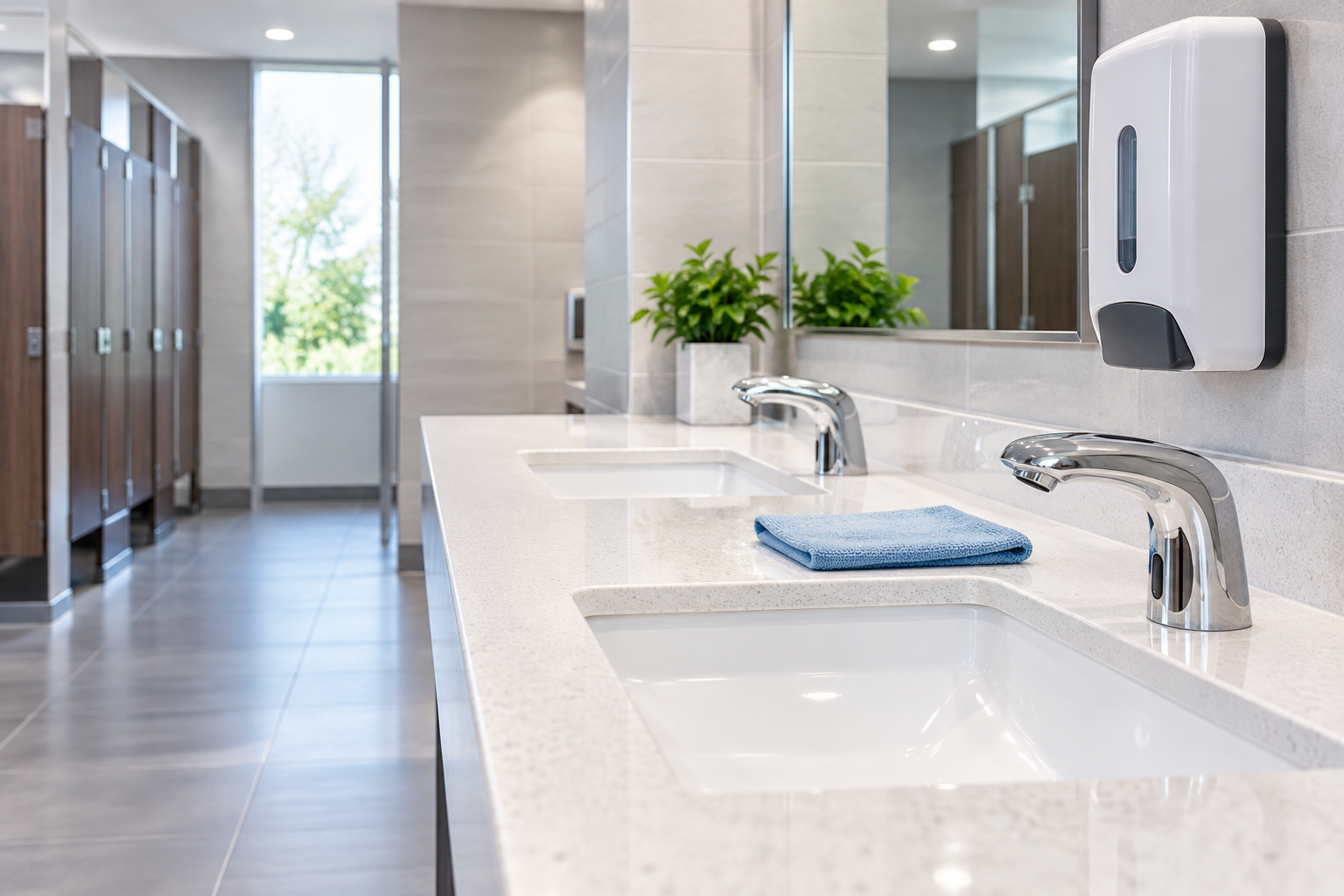
Record where moisture appears and whether it returns after normal cleaning. Photograph the condition only where safe and without capturing personal information. Do not move toilets, disturb seals, remove panels or reach behind fixed fixtures.
Building maintenance or a qualified plumber should decide what inspection is needed. Sewage leakage or backup belongs outside an ordinary cleaning response.
Problem: odour lingers across the room
Possible cause: air movement or another source needs investigation
Ventilation is one part of indoor air quality, alongside sources within the building and activities in the space. CCOHS identifies source control and ventilation among its control strategies.
Response: request an operational check
Report whether the problem changes during occupied hours and whether exhaust operation seems different from usual. Ask maintenance to verify the ventilation system. Do not adjust fans or dampers, remove grilles or prop open fire-rated doors.
Avoid introducing extra fragrance during the investigation. It adds another variable without demonstrating that the original source is gone.
Turn the complaint into an assigned action
Use one handoff record containing the location and recurrence pattern, visible conditions, cleaning completed, products used, access restrictions and the next owner. Identify a follow-up date and unresolved questions.
Review the result under conditions comparable to those when complaints occurred. Change one non-urgent variable at a time where practical; urgent repairs should not wait for a trial.
An office-cleaning plan can cover agreed accessible surfaces and reporting. When you request a quote, provide observations and maintenance status. The aim is a defined cleaning scope—not a promise that more cleaning will solve an unidentified source.