Proper office floor care supports personal health by removing accumulated dust and dirt, managing tracked-in moisture, and reducing conditions that contribute to slips. It also helps maintain a comfortable workplace for people sensitive to dust or strong cleaning fragrances. The right approach combines routine soil removal, appropriate products, and scheduled deeper cleaning—not simply making floors look shiny.
Key takeaways
- Clean floors support hygiene, but floor disinfection is not a substitute for hand hygiene or high-touch surface cleaning.
- Entrance moisture, loose mats, dust accumulation, and cleaning residue deserve attention before appearance alone.
- Hybrid offices need cleaning schedules based on actual traffic and use, not just desk counts.
- Low-odour products, correct dilution, and proper drying matter as much as cleaning frequency.
- A useful floor-care quote separates routine maintenance from periodic treatments.
Why is floor care important for personal health?
Floor care matters because it helps control dust, tracked-in contamination, moisture, and residues in spaces people use throughout the working day.
Consider an illustrative Ontario office where employees share desks and attend on overlapping days. After a wet winter morning, the entrance mat is damp, a pale salt trail crosses the lobby, and grit collects beneath chairs. By afternoon, someone reports a strong cleaning smell near a meeting room.
Nothing here proves that the floor is causing illness. However, each observation points to a maintenance issue worth investigating: insufficient moisture capture, accumulated soil, or a product and application method that may not suit an occupied office.
This is a planning scenario, not a documented Arelli client case study. It shows how a manager can move from “the floors look dirty” to a practical health-conscious maintenance plan.
Public Health Ontario distinguishes cleaning from disinfection: removing soil and applying a disinfectant are different tasks. An office floor programme should reflect that distinction rather than treating stronger chemicals as the default answer.
What should the office manager address first?
The first priority is to manage immediate hazards and identify where soil and moisture enter or accumulate.
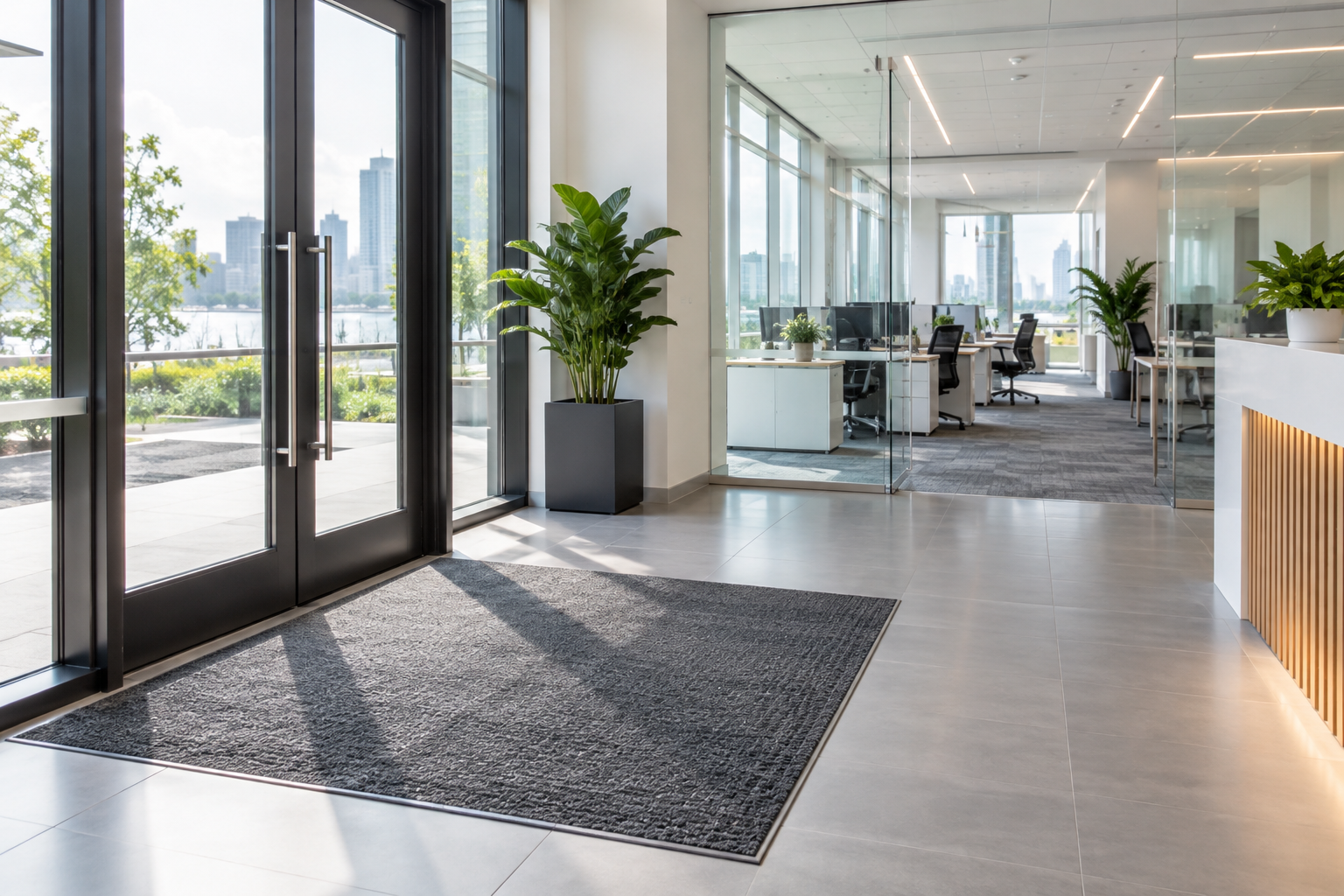
In this scenario, the manager begins at the entrance rather than ordering a deep clean for the entire office. The mat is checked for saturation, movement, and curled edges. The salt trail is addressed using a method suitable for the flooring, with access controlled until the area is dry.
Next comes a walk through the office:
- Reception: Is moisture travelling beyond the matting?
- Desk areas: Is grit collecting beneath chairs and along carpet edges?
- Kitchen: Are spills being removed promptly, or left until evening?
- Washrooms: Are floors cleaned with tools kept separate from kitchen areas?
- Meeting rooms: Does cleaning leave an odour or visible film?
The manager records the location and timing of each concern. “Entrance becomes wet after the morning arrival period” is more useful than “floors need attention.”
These observations help shape an office cleaning plan around the building’s actual conditions, including who responds between scheduled visits.
What should a health-conscious floor-care checklist include?
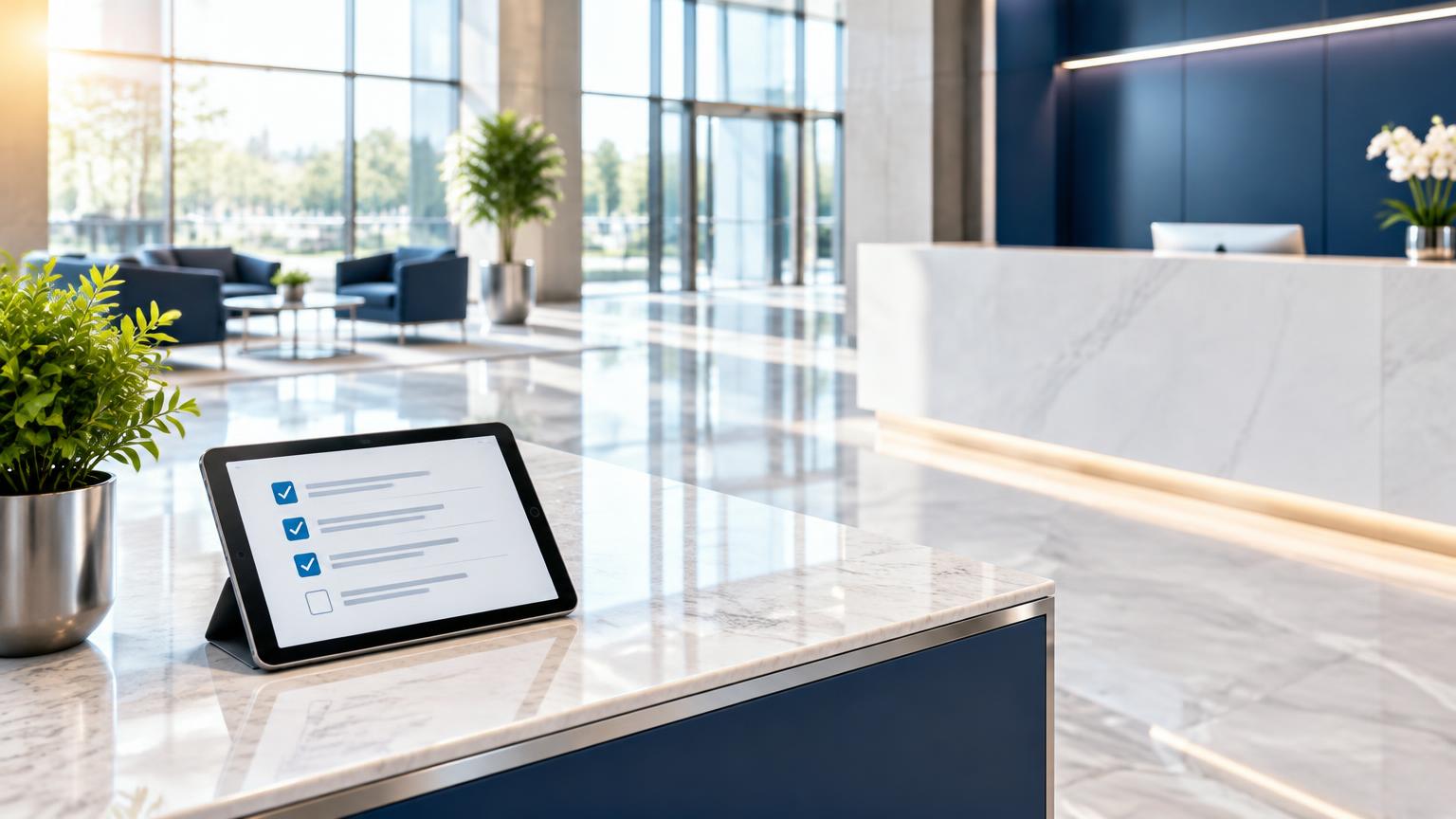
A useful checklist should connect each floor area with its main concern, cleaning task, and observable completion standard.
For the example office, the checklist below becomes a starting point. Frequencies should be adjusted for occupancy, weather, flooring instructions, and the condition found during inspections.
| Area | Main concern | Suggested routine | What to check afterwards |
|---|---|---|---|
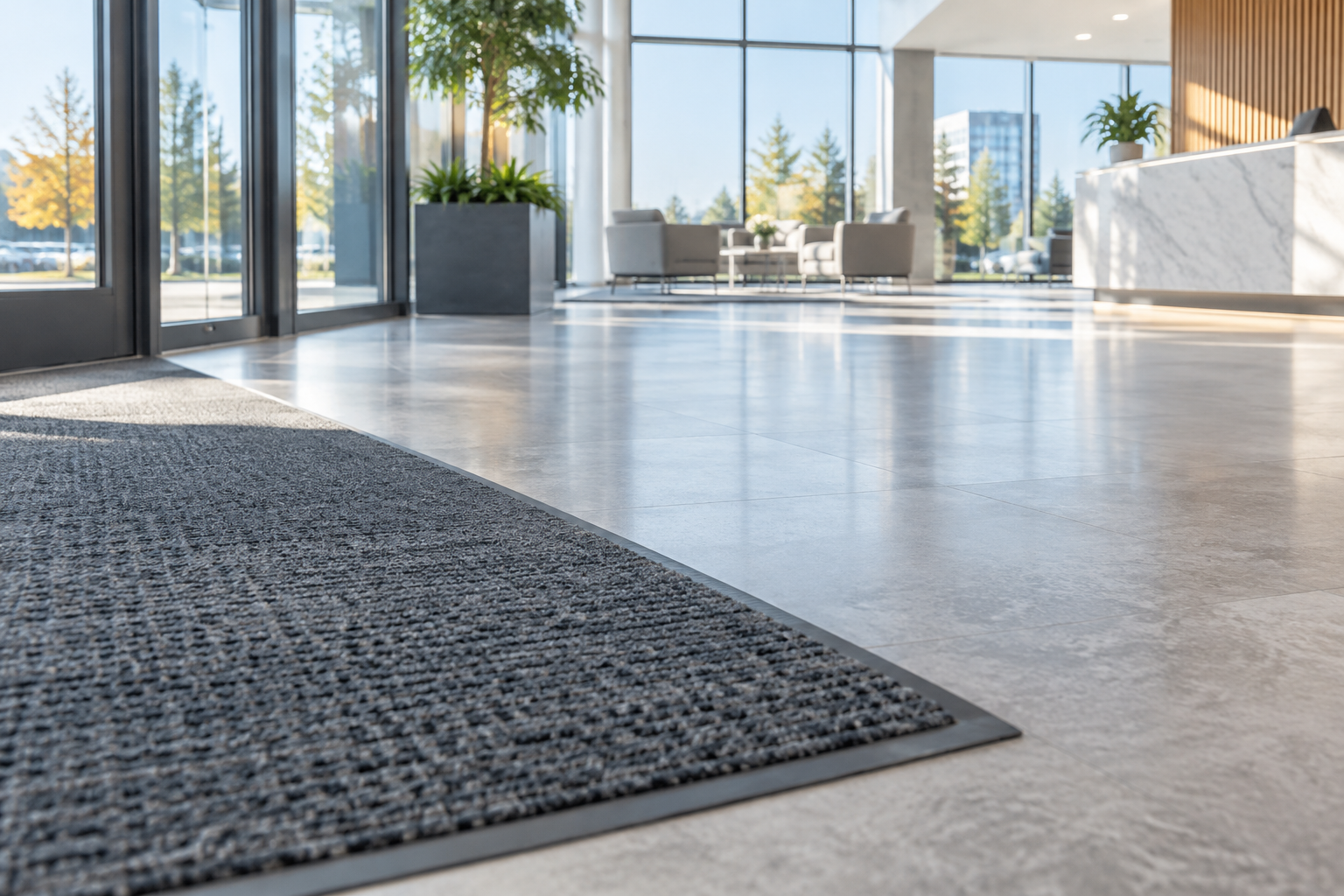
| Entrances and matting | Water, salt, grit, loose edges | Inspect during occupied periods; remove soil and address wet matting as needed | Mats lie flat; surrounding floor is dry and free of tracked-in residue |
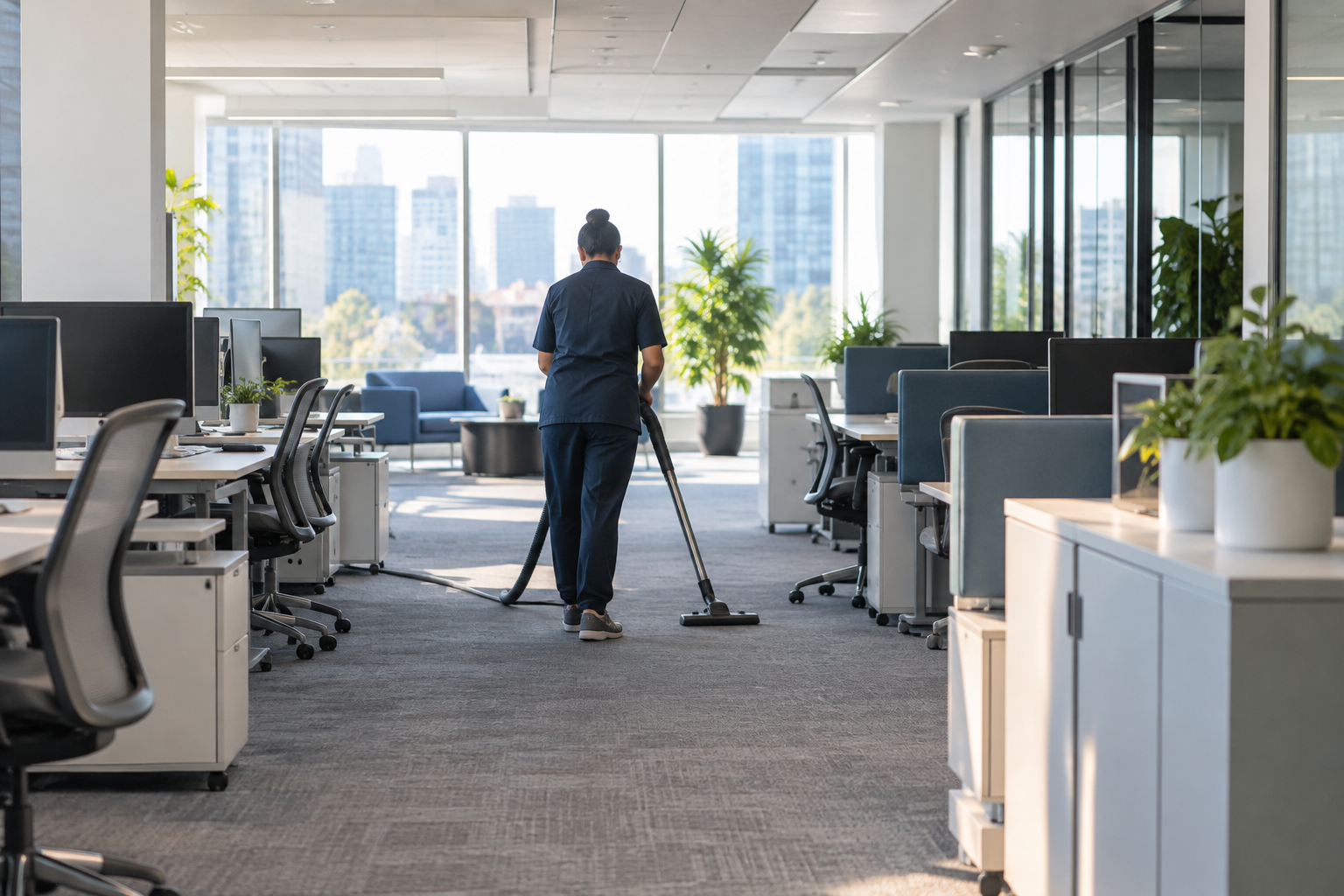
| Carpeted desk areas | Dust and embedded grit | Vacuum in line with use; include accessible edges and chair areas | No visible debris; recurring spots are recorded |
| Hard-floor corridors | Abrasive soil and cleaning film | Remove loose soil before damp cleaning | Floor is dry, without sticky residue or excess product |
| Kitchens and break rooms | Food debris and spills | Respond to spills promptly; clean during scheduled service | No food debris or greasy film remains |
| Washrooms | Soil, moisture, and cross-contamination | Clean according to use with designated tools | Corners and edges are addressed; tools are kept separate |
| Carpet spots and heavily soiled zones | Residue, odour, and excess moisture | Treat promptly using material-compatible methods | Spot is reassessed after drying; persistent concerns are escalated |
A visual inspection confirms presentation and obvious maintenance issues; it does not prove that a surface is free of microorganisms. The checklist should therefore document the agreed process, not make unsupported claims about hygiene results.
How often should floors be cleaned in a hybrid office?
Hybrid office floors should be cleaned according to traffic and soil conditions, with extra attention on busy days and during wet weather.
In the example office, an average attendance figure hides the real problem: most employees arrive on the same days. The entrance, kitchen, and meeting-room routes receive concentrated use even though some desks remain empty.
The manager adjusts the plan around those peaks. Busy occupied areas may need daily routine cleaning, while quieter areas can follow a lower frequency supported by inspection. Spills still require a response whenever they occur.
Ontario winters add another variable. Snow, slush, and de-icing material can require additional entrance checks even when attendance is low. Matting helps capture soil and moisture, but saturated or displaced mats need attention themselves.
Periodic carpet extraction or hard-floor treatment should be based on condition, material requirements, and the maintenance history. A calendar reminder is useful; it should not replace an assessment of whether the work is needed.
Which floor-cleaning methods best support hygiene and comfort?
The best method removes soil effectively without leaving excessive moisture, irritating residue, or damage to the flooring.
The example manager asks the cleaning provider to explain the process rather than simply change products. That discussion should cover several practical details.
Remove loose soil before wet cleaning
Vacuuming or suitable dust-control methods remove grit before it becomes muddy residue. Well-maintained vacuum equipment with appropriate filtration can help limit dust released during cleaning. Equipment selection alone is not enough: filters, bags, seals, and cleaning technique also matter.
Match the product to the material
Carpet, resilient flooring, tile, and finished wood do not share the same maintenance requirements. Follow flooring and product instructions, including dilution and any restrictions on moisture. Excess detergent can leave a film that attracts soil or changes the floor’s feel underfoot.
Use disinfection where it is justified
Routine cleaning remains the foundation of office floor hygiene. Where disinfection is appropriate, use a Health Canada-authorized disinfectant suitable for the surface and follow its label, including required contact time. Broader treatment may be appropriate for a particular incident or public-health direction, but it should not be presented as a routine cure for office illness.
Plan for drying and chemical handling
Wet work needs an access and drying plan. Under Ontario’s occupational health and safety framework, cleaning arrangements should account for worker and occupant safety; WHMIS provides a framework for hazardous-product information, labels, safety data sheets, and training.
For periodic work, ask whether specialty cleaning services are appropriate rather than adding an unsuitable treatment to routine mopping.
Are green floor-cleaning products better for employee health?
Green products can be part of a health-conscious programme, but a green label alone does not establish safety, suitability, or cleaning performance.
In the scenario, the reported odour prompts a review of fragrance, dilution, ventilation, and cleaning time. It does not establish that a particular product caused a medical problem. Low-odour or fragrance-free options may suit the workplace better, especially where occupants report sensitivities.
Ask the provider to explain:
- Why the product is suitable for that floor.
- Whether fragrance is necessary.
- How dilution is controlled.
- What precautions appear on the label and safety data sheet.
- How equipment and reusable tools are maintained.
Using the correct amount of product, avoiding unnecessary treatments, and controlling water use can support sustainability as well as sensible maintenance. Employees with persistent symptoms should seek medical advice; a cleaning review cannot diagnose their cause.
How much does office floor care cost, and what is included?
Office floor-care costs depend on the space, service frequency, traffic, washrooms, flooring, and any special treatment or scheduling requirements.
The manager in our example requests a revised scope, not simply “more cleaning.” That makes it possible to compare providers on the same work.
Routine service may include vacuuming, loose-soil removal, damp mopping, and limited spot cleaning when specified. Carpet extraction, machine scrubbing, finish restoration, and other periodic treatments should be identified separately. Moving furniture and working around occupied areas also need clarification.
Key cost drivers include:
- Square footage and layout: Open corridors differ from densely furnished work areas.
- Frequency and traffic: Concentrated attendance and wet-weather soil affect workload.
- Washrooms and kitchens: Moisture and food residues require suitable methods and tools.
- Flooring: Different materials require different equipment and maintenance.
- Special requirements: Access restrictions, drying time, and periodic treatments affect planning.
See Arelli’s office cleaning pricing guidance for the factors behind a tailored quote. Arelli offers Price Match on comparable written quotes, so matching the scope is an important part of the comparison.
How do you choose a floor-care provider and assess the results?
Choose a provider that explains its methods, documents the scope, and gives you a clear way to report and resolve concerns.
For the example office, success would mean dry entrances, less visible grit, no persistent cleaning film, and a dependable response when conditions change. These are proposed assessment criteria, not claimed client results.
Ask prospective providers who handles daytime spills, how tools are separated between areas, and how they protect flooring during periodic work. Confirm what staff should do if moisture or an odour returns after cleaning.
Arelli’s office cleaning services can be discussed alongside floor-specific requirements. Arelli uses local crews, not a franchise, and offers 24/7 client support. Its client app supports reporting concerns and following up through client care, helping managers keep observations attached to a clear action rather than an informal conversation.
Frequently asked questions
These answers cover common questions about floor care and personal health in ordinary office settings.
Can dirty office carpets affect allergies?
Carpets can collect dust and other material that may bother sensitive occupants. Appropriate vacuuming and periodic cleaning help manage accumulation, but persistent symptoms require medical advice rather than assumptions about the carpet.
Should office floors be disinfected every day?
Daily disinfection is not automatically necessary for every office floor. Base the approach on the setting, contamination concerns, and relevant public-health guidance, while maintaining routine cleaning.
Is a strong cleaning smell a sign of better hygiene?
No, fragrance strength does not establish cleaning or disinfection performance. Review the product, dilution, ventilation, and application method if odours linger.
Does a shiny floor mean it is clean and safe?
Shine alone does not establish hygiene or slip resistance. Moisture, residue, loose soil, and flooring condition are more useful inspection points.
Can floor cleaning happen while employees are working?
Some tasks can take place in occupied offices if noise, access, and occupant comfort are managed. Wet cleaning and periodic treatments need particular care so people do not walk through areas before they are ready for use.
Get a free sample clean
Arelli offers a free 45-minute sample clean before you commit. Book a free sample clean to discuss your office’s flooring, traffic patterns, and hygiene priorities, and confirm which tasks are suitable for the visit.