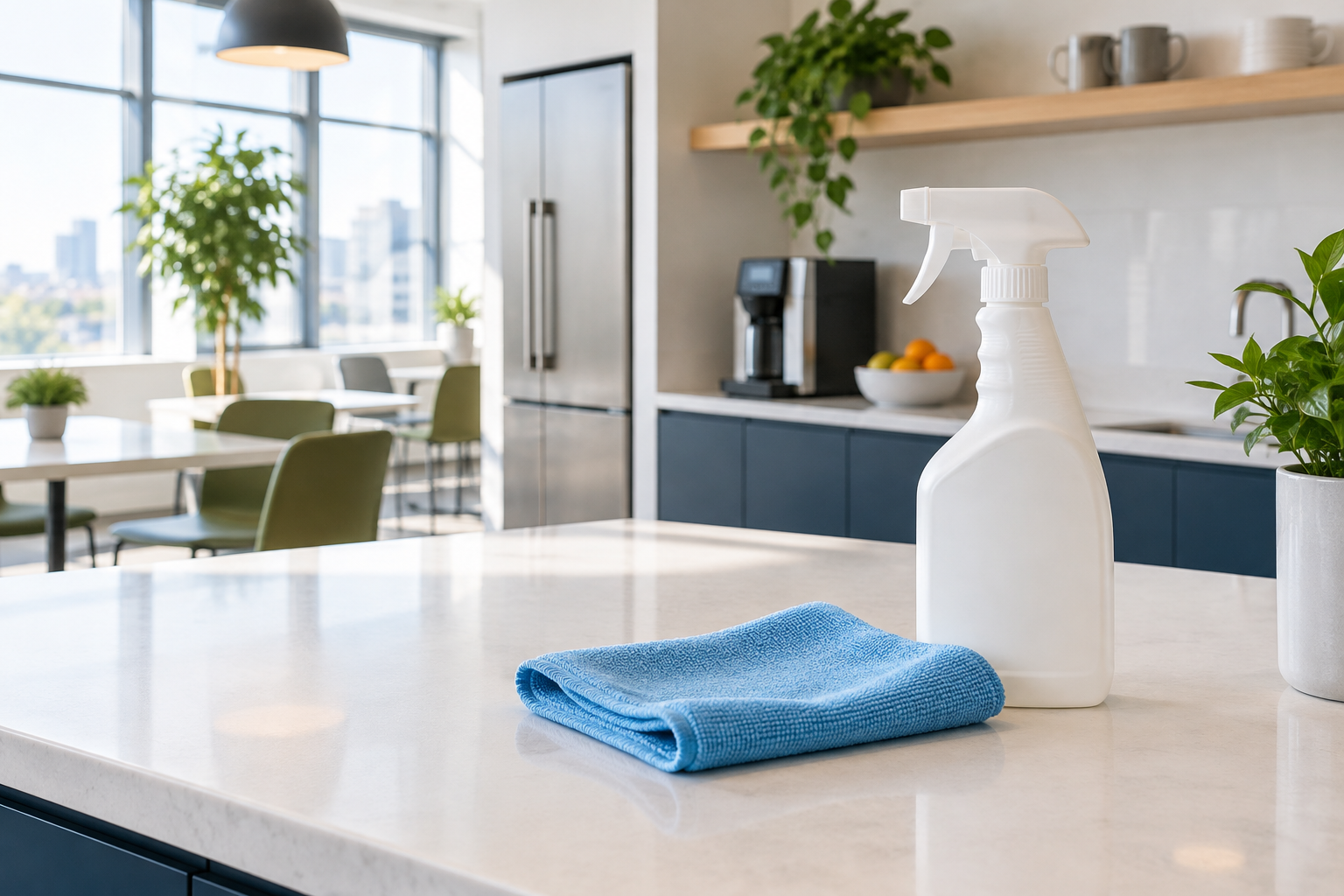
The meeting room smells freshly treated. A worker has used extra concentrate on a busy washroom counter. A wipe has passed over every door handle.
Those observations describe what happened. They do not establish that disinfection was completed correctly. Better questions concern the product, surface, directions and available time. The following myths pair a reality with a qualification so that a simple answer does not become another misconception.
Myth: “If it smells disinfected, it is disinfected.”
Reality: Smell is not a performance test. Disinfection depends on an appropriate product used as directed, including required contact time. Canadian public-health guidance describes disinfection through label-directed use—not the odour left behind.
A scent cannot tell you whether the surface was prepared, the product covered the intended area or it remained wet long enough.
Qualification: Odour can still be a workplace concern. CCOHS cleaning-product guidance discusses risks influenced by ingredients, ventilation and released mists, vapours or gases. Unexpected irritation should prompt a safety review, not reassurance that the product must be working.
The better quality check reviews the procedure, not a walk-through sniff test.
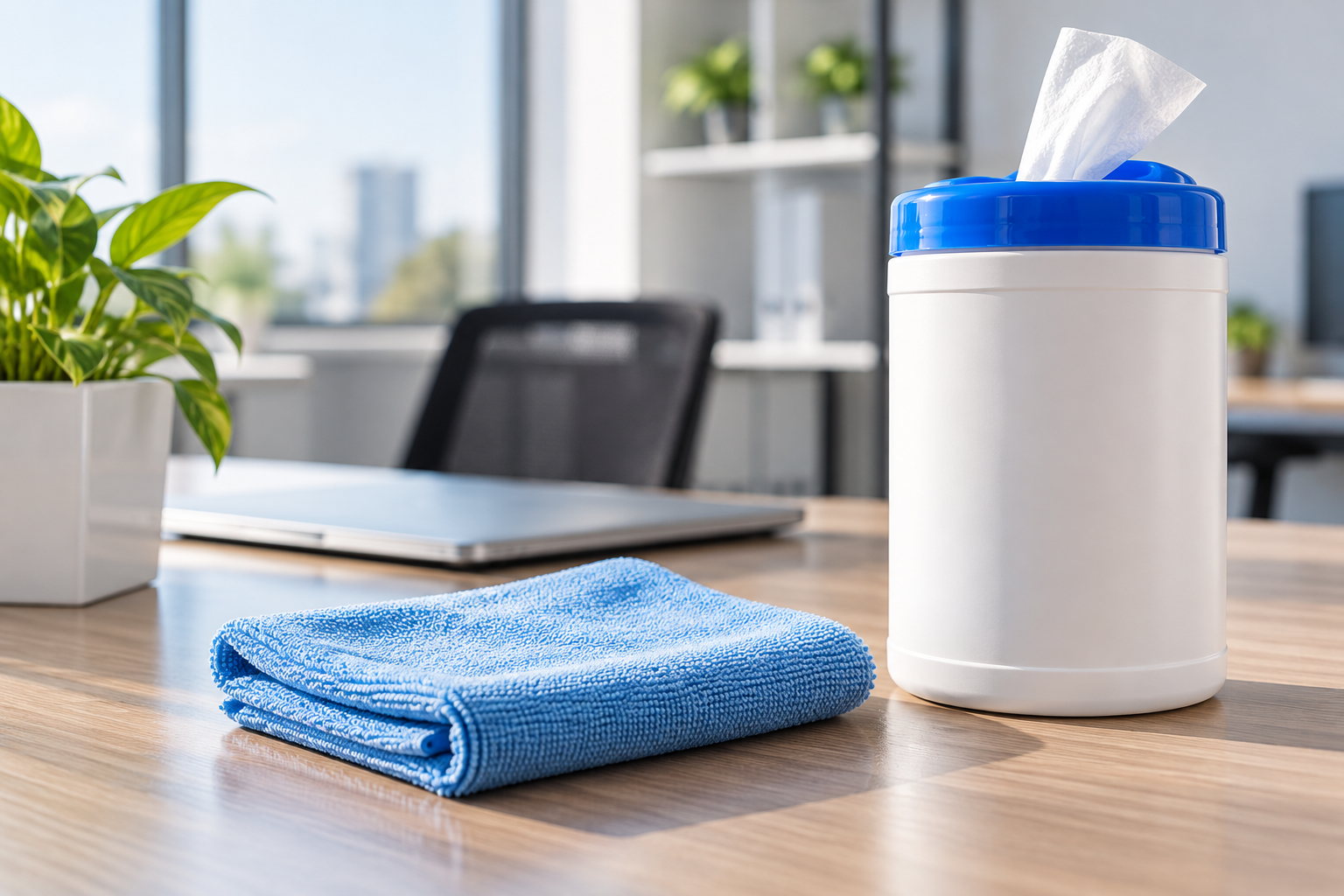
Myth: “Extra concentrate makes the job safer.”
Reality: Intended dilution is part of the procedure. Extra concentrate moves a mixture away from its specified preparation; it does not establish better disinfection. CDC facility guidance directs users to follow dilution instructions; CCOHS emphasizes safe handling and appropriate protection.
Measuring and dispensing arrangements matter. “A generous splash” is not repeatable. Supervisors need to know how the prepared solution corresponds to the intended use.
Qualification: Products may have different authorized directions for different tasks. Follow the applicable directions rather than assuming one dilution fits everywhere. Ready-to-use products should not be treated as concentrates. Resolve uncertainty before continuing; do not compensate by adding more.
Myth: “A quick wipe completes disinfection.”
Reality: Application and completed contact time are separate steps. CDC states that a surface should remain wet throughout required contact time. A wipe drying almost immediately may not deliver the specified conditions.
Contact time concerns the product’s required wet exposure on the surface—not how long a worker stands nearby.
Qualification: No universal time applies to every product, organism and use. Borrowing a longer time from another bottle is no more authoritative than borrowing a shorter one. If the surface dries too soon, consult the applicable instructions for maintaining wetness. Do not invent a reapplication method or wipe early for convenience.
A service window must allow the steps specified for the chosen procedure. If it does not, the plan needs revision.
Myth: “Cleaning and disinfecting mean the same thing.”
Reality: Cleaning removes dirt and germs. Disinfection kills or inactivates germs under specified conditions. CDC recommends cleaning before sanitizing or disinfecting because impurities can reduce effectiveness.
A tidy surface is not proof of disinfection; applying disinfectant does not make visible soil irrelevant.
Qualification: Combination products can have particular authorized uses. Check whether the label permits the intended cleaner-disinfectant process and what preparation it requires. A “one-step” claim does not remove its conditions.
When comparing office-cleaning scopes, distinguish soil removal from specifically requested disinfection. That is clearer than asking for everything to be “sanitized.”
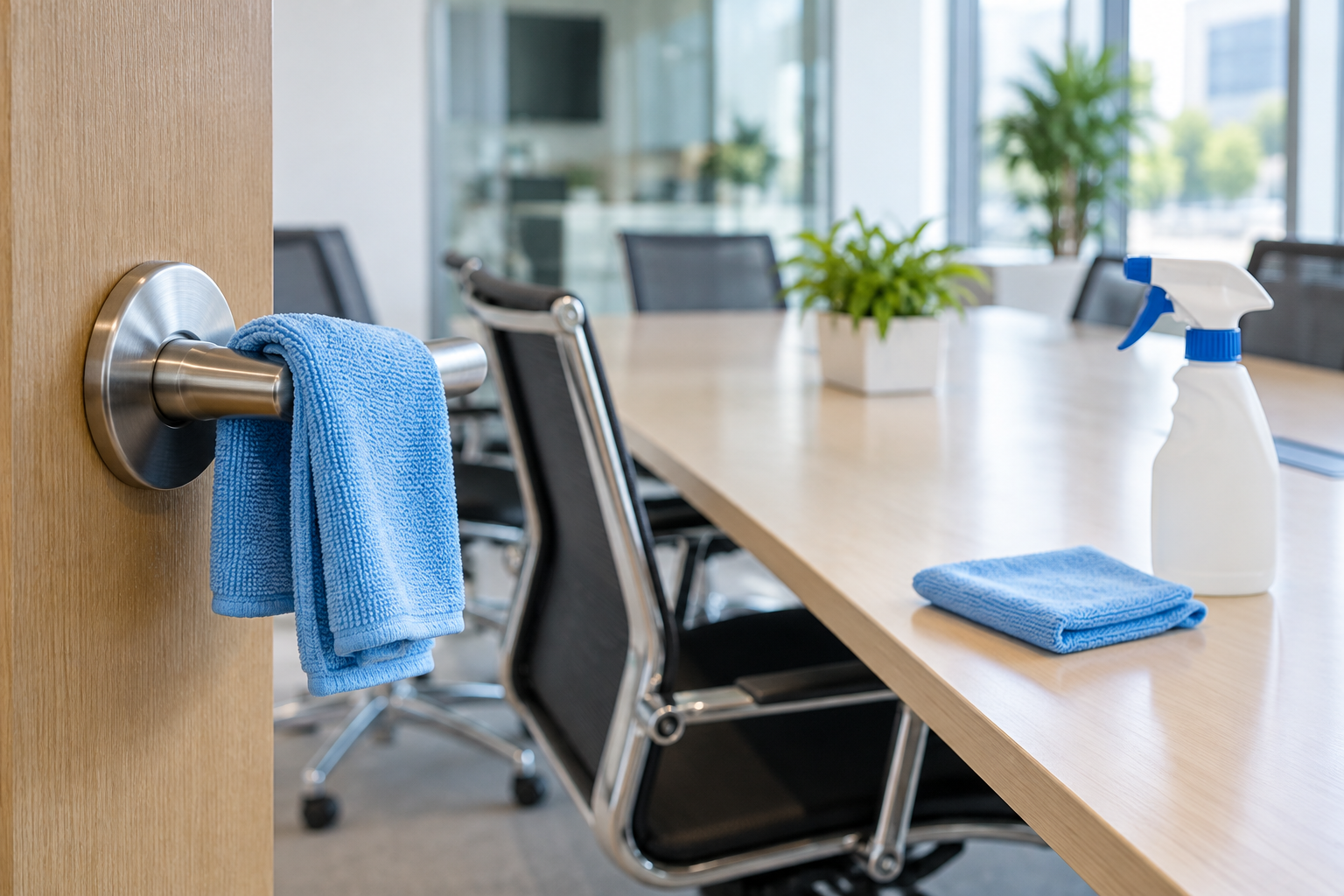
Myth: “Mixing products covers more germs.”
Reality: Mixing cleaners is not a dependable route to broader protection. CCOHS says never to mix cleaning products and warns against combinations such as bleach and ammonia. Hazardous reactions can result.
A second product does not automatically strengthen the first. It may introduce a chemical hazard and invalidate the planned procedure.
Qualification: Diluting concentrate with water as directed is different from improvising mixtures of cleaners. Permission comes from the instructions, not familiarity with ingredients. Where products are used in successive tasks, follow relevant preparation, rinsing and compatibility directions. Do not combine leftovers to save space.
Workers need accessible instructions and a clear response when the previous product is unknown. Guesswork is not a cleaning method.
Myth: “Every office surface needs disinfectant every day.”
Reality: Needs depend on setting and circumstances. CDC community-facility guidance includes offices, recommends regular high-touch cleaning and additional disinfection when people have obviously been ill. Traffic and specific circumstances may warrant further measures.
That differs from treating every surface as equally important or chemical use as a quality score.
Qualification: Outbreak advice and specialized settings can change requirements. General office guidance does not replace healthcare, food-processing or other specific protocols. For targeted work, discuss affected areas and the intended procedure when reviewing disinfection and sanitization services.
Replace myths with a label-first check
Confirm the intended surface and use, preparation, dilution where applicable, wet contact time, protective equipment, ventilation and rinsing instructions. Workers must be able to consult the label and relevant safety information.
Canadian public-health guidance advises checking for a Drug Identification Number confirming approval for sale in Canada. That check does not replace the directions for the actual use or establish suitability for every surface.
Allow enough time to complete the procedure. Request an Arelli quote describing surfaces, occupancy and why disinfection is sought. Those details provide a better starting point than requesting the strongest-smelling product.