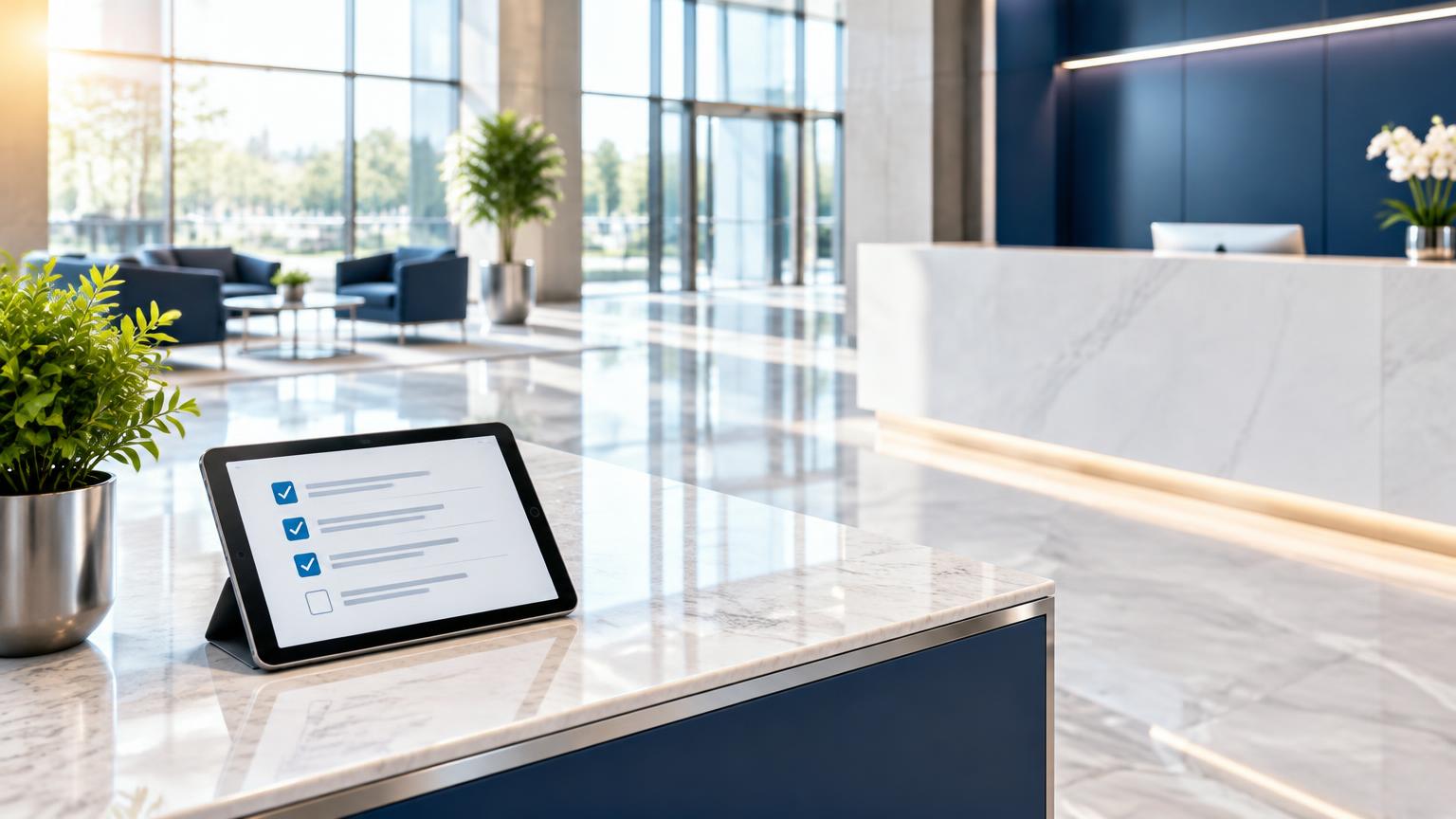

“Please improve the cleaning” is difficult feedback to act on. “Food crumbs remain along the kitchenette counter edge after service” gives a cleaner a location, observable problem and clear next step.
A useful walkthrough checks agreed work against visible conditions. It identifies what passes, what needs correction and what cannot fairly be assessed. It is not a hygiene certification, laboratory test or proof that surfaces are free of microorganisms.
Set up a fair inspection
Use the current scope, not an assumed list of everything a cleaner might do. Confirm which tasks were due and which belong to a periodic schedule.
Inspect close to completion, preferably before substantial reoccupation. Otherwise a newly spilled drink or recently used washroom can be mistaken for missed work. Record inspection time and known activity since service. Use normal lighting and accessible viewpoints; do not move confidential papers or open personal storage.
Agree on three outcomes:
- Pass: The scheduled task meets the agreed observable condition.
- Rework: An in-scope task has a visible defect needing correction.
- Not verified: Access, timing or missing information prevents a fair decision.
These criteria should be agreed before becoming a performance scorecard for your office cleaning.
Check entrances, floors and walking routes first
Start with conditions affecting safe movement. CCOHS identifies wet surfaces, loose mats and clutter as slip-and-trip concerns and recommends prompt spill cleanup and wet-area marking. Address hazards immediately rather than saving them for the report.
| Check | Pass | Rework or escalation |
|---|---|---|
| Entrance floor | No loose grit, litter or tracked-in debris remains in scheduled areas. | Visible debris remains after service: arrange cleaning. |
| Hard floors | No visible soil, sticky spill residue or solution pooling. | Missed soil or liquid: arrange correction and protect access. |
| Carpet | No readily visible loose debris in accessible scheduled areas. | Crumbs, paper or grit remain: request vacuuming. |
| Mats and routes | Mats lie flat and routes are unobstructed. | Curled mat, cable or obstruction: correct safely or notify facilities. |
A worn finish, damaged carpet or permanent stain may require maintenance or specialist assessment rather than repeated routine cleaning. Do not classify every mark as poor performance.
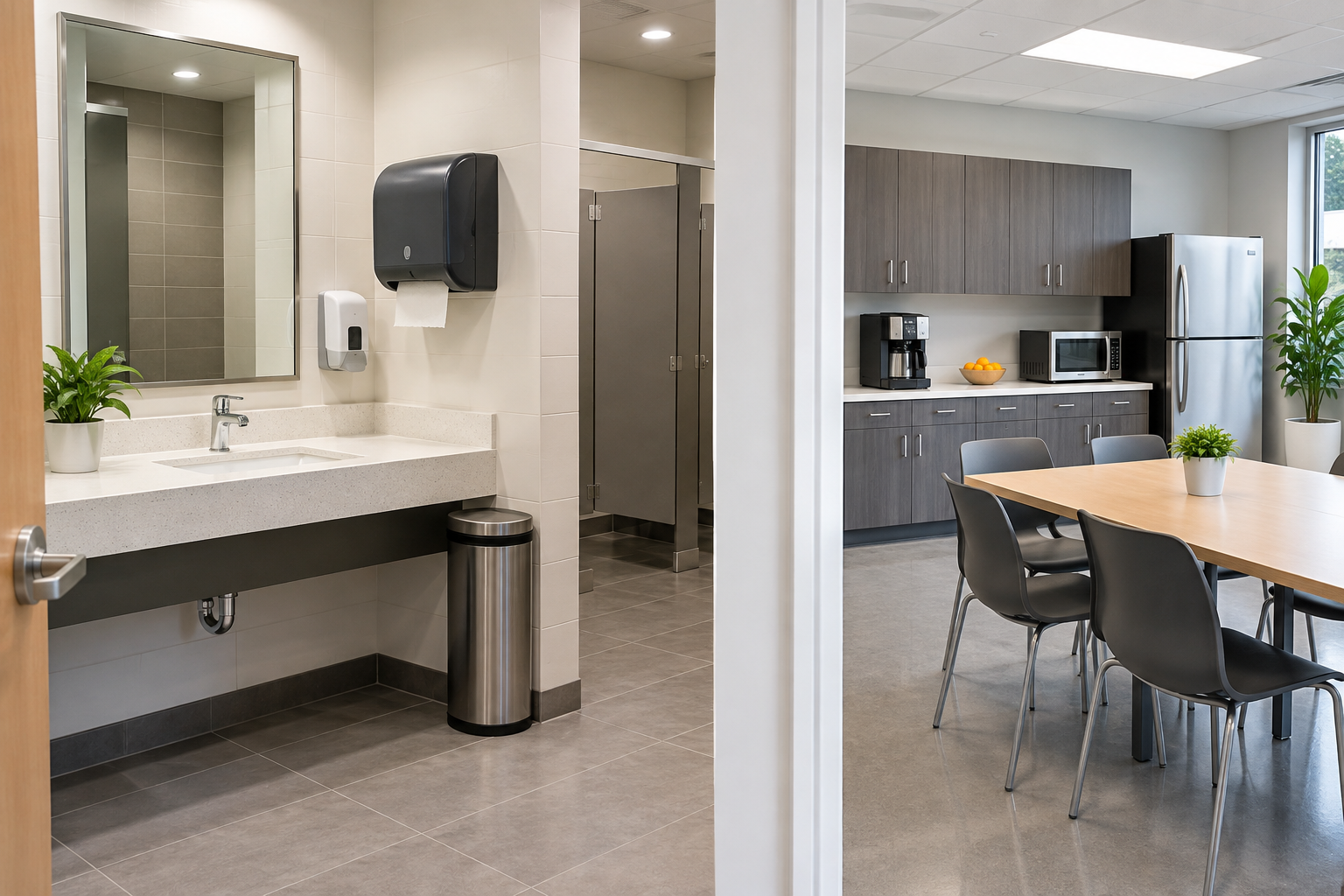
Inspect washrooms by fixture and supply point
Check each washroom instead of assuming one acceptable room represents the others.
| Check | Pass | Needs rework or follow-up |
|---|---|---|
| Basins and counters | No visible hair, loose soil or removable splash residue. | Hair, soil or missed splash marks remain. |
| Toilets and urinals | Accessible included surfaces have no visible waste residue. | Visible residue remains on scheduled surfaces. |
| Mirrors | No obvious fingerprints, splashes or streaks under normal lighting. | Missed marks or cleaning streaks are visible. |
| Dispensers | Agreed consumables are available and dispensers operate. | Missing supplies or failure: distinguish restocking from repair. |
| Bins and edges | Scheduled waste removed, with no litter or leakage. | Waste, leakage or debris remains after service. |
Fragrance is not a pass criterion. Persistent odour despite visibly clean surfaces needs investigation: waste, leaks, drains or another building issue may be involved.
Check kitchens and shared work areas
Inspect edges and accessible corners—not only the centre of surfaces.
- Counters and tables: Pass when included surfaces have no crumbs, spills or sticky residue. Rework when removable food soil remains.
- Sinks: Pass when accessible surfaces are free of food debris and removable residue. Report leaks separately.
- Appliance exteriors: Pass when included handles and fronts are free of splashes and fingerprints. Interiors require an agreed task.
- Waste stations: Pass when scheduled waste is removed and no leakage or loose debris remains nearby.
- Desks and meeting rooms: Pass when accessible, in-scope surfaces are free of visible dust and debris.
A desk covered in documents may be “not verified,” not a cleaning failure. Record the obstruction and request access without handling confidential material.
CCOHS housekeeping guidance treats orderly work areas and waste removal as ongoing responsibilities. That supports checking usable spaces, not appearance alone.
Verify disinfection separately from appearance
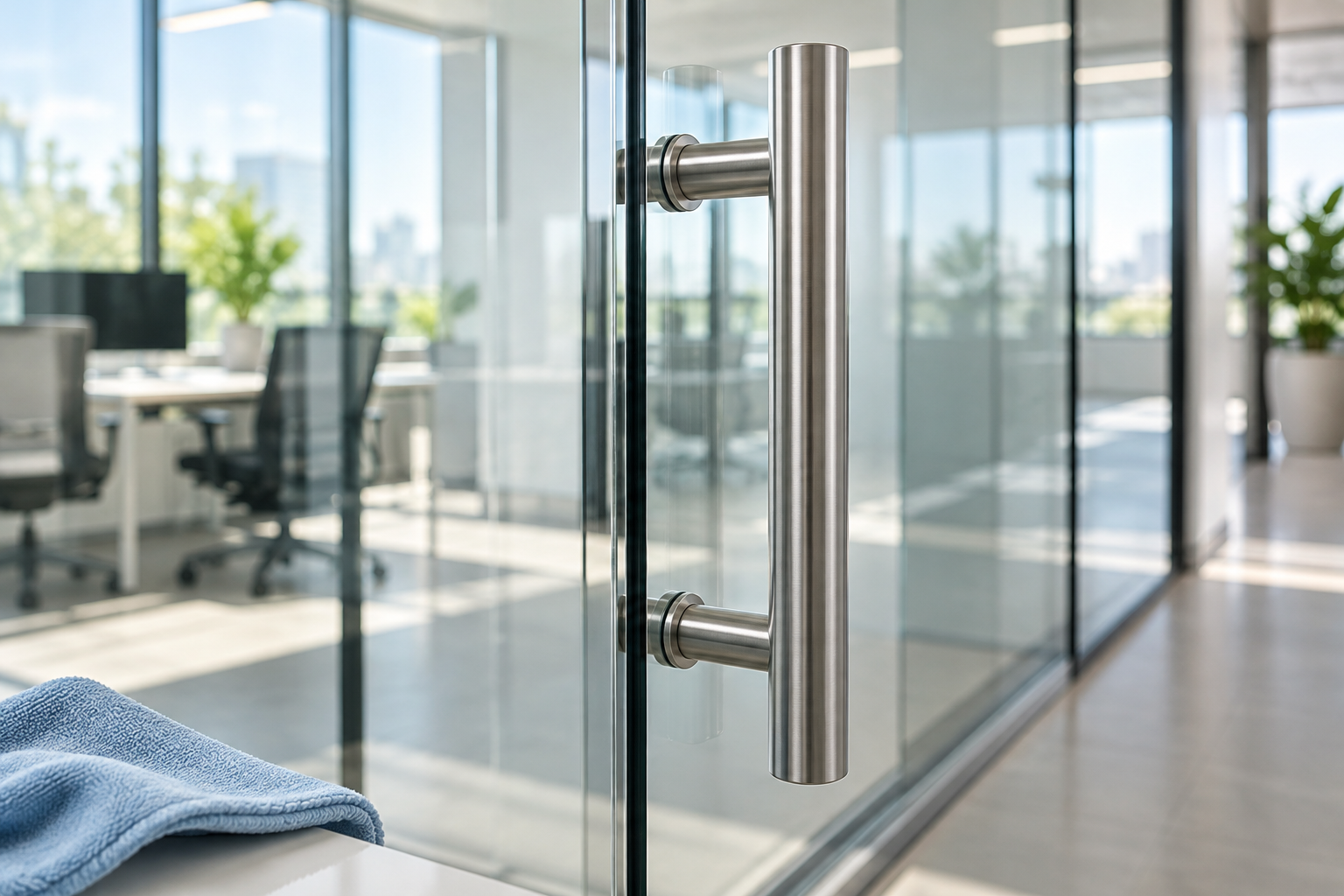
A shiny handle does not prove a disinfection procedure was completed. If included, confirm intended surfaces, product, label instructions and how required wet contact time is achieved. Ask for clarification when records are incomplete; do not award a hygiene pass based on smell.
CCOHS cleaning-staff guidance advises appropriate products, cleaning before disinfection, following instructions and required contact time. For electronics, confirm the approved method rather than spraying a device to demonstrate completion.
Record defects and close the loop
Location: Meeting room, doorway side of table.
Observation: Visible crumbs remain along the accessible edge after service.
Action: Remove debris and clean the edge.
Owner and timing: Agree with the service contact.
Closure: Record the recheck result and time.
Photograph defects only where permitted, excluding people, screens and confidential information. If a room passes after service but deteriorates before the next visit, discuss frequency or daytime support. Repeated defects immediately after service call for a review of method, access and supervision.
Keep the checklist aligned with the commercial cleaning scope. Bring recurring observations to a quote discussion so expectations are defined before the first inspection—not invented afterward.