
A freshly cleaned office can look noticeably better. Whether its air has improved is a different question.
Cleaning can remove accumulated dust and other material that contributes to indoor contamination. Products can also introduce pollutants, and housekeeping cannot correct every ventilation or moisture problem.
For Ontario businesses, the useful answer is conditional: cleaning can support indoor air quality when methods, products and scope address relevant sources. That does not prove that a particular schedule improves employee health or productivity.
What the evidence supports
Cleaning belongs within source management
The EPA’s office air-quality guide identifies pollutant sources, ventilation, moisture and humidity as interacting influences. Inadequate housekeeping and maintenance can contribute to biological contaminants; dust can enter from outdoors or arise from indoor activities.
That supports a practical role for cleaning: managing material accumulating inside the workplace. Removing dust from an accessible surface establishes that material was removed from that surface. It does not establish how much airborne particulate matter changed across an occupied office.
“Removes accumulated dust” describes a cleaning outcome. “Improves everyone’s breathing” is a broader claim requiring different evidence. A proposal should not quietly replace the first statement with the second.
Product choice can help—or complicate—the goal
EPA guidance on greener cleaning products recognizes both sides: removing dust and allergens supports the indoor environment, but some products contain chemicals associated with irritation. Vague “green” claims are not reliable product assessments.
The implication is not to stop cleaning. Avoid treating more product, stronger fragrance or more frequent application as automatic improvements. Ask what the product is intended to do, whether it suits the surface and how workers will use it. A recognizable scent does not replace that assessment.
Air quality has several causes
CCOHS indoor-air guidance considers building materials, furnishings, activities, climate and occupants. Investigation examines conditions and complaint patterns rather than assuming one universal cause.
A cleaning review should be part of an investigation—not its predetermined conclusion. If complaints occur in one crowded meeting room, or began after renovation, those patterns deserve attention. Increasing cleaning everywhere may leave the relevant cause untouched.
What these sources do not establish
These are authoritative guidance resources, not controlled trials of a specific Ontario office-cleaning programme. They explain recognized sources and sensible controls. They do not establish a universal airborne-dust reduction from nightly cleaning, an ideal frequency for every office or a guaranteed reduction in sick days.
Surface results are not air measurements.
Three distinctions help keep decisions honest:
- Surface versus air: A cleaner desk does not establish a measured change in airborne exposure.
- One pollutant versus the environment: Dust readings do not establish satisfactory ventilation, humidity or chemical emissions.
- Association versus effect: Complaints may change alongside occupancy, weather, maintenance or renovation—not solely cleaning.
An assessment should say what was observed, what was measured and what remains uncertain. Absence of a measured benefit does not make ordinary cleaning unnecessary; it limits what can responsibly be claimed about that benefit.
Cleaning cannot replace ventilation or moisture control
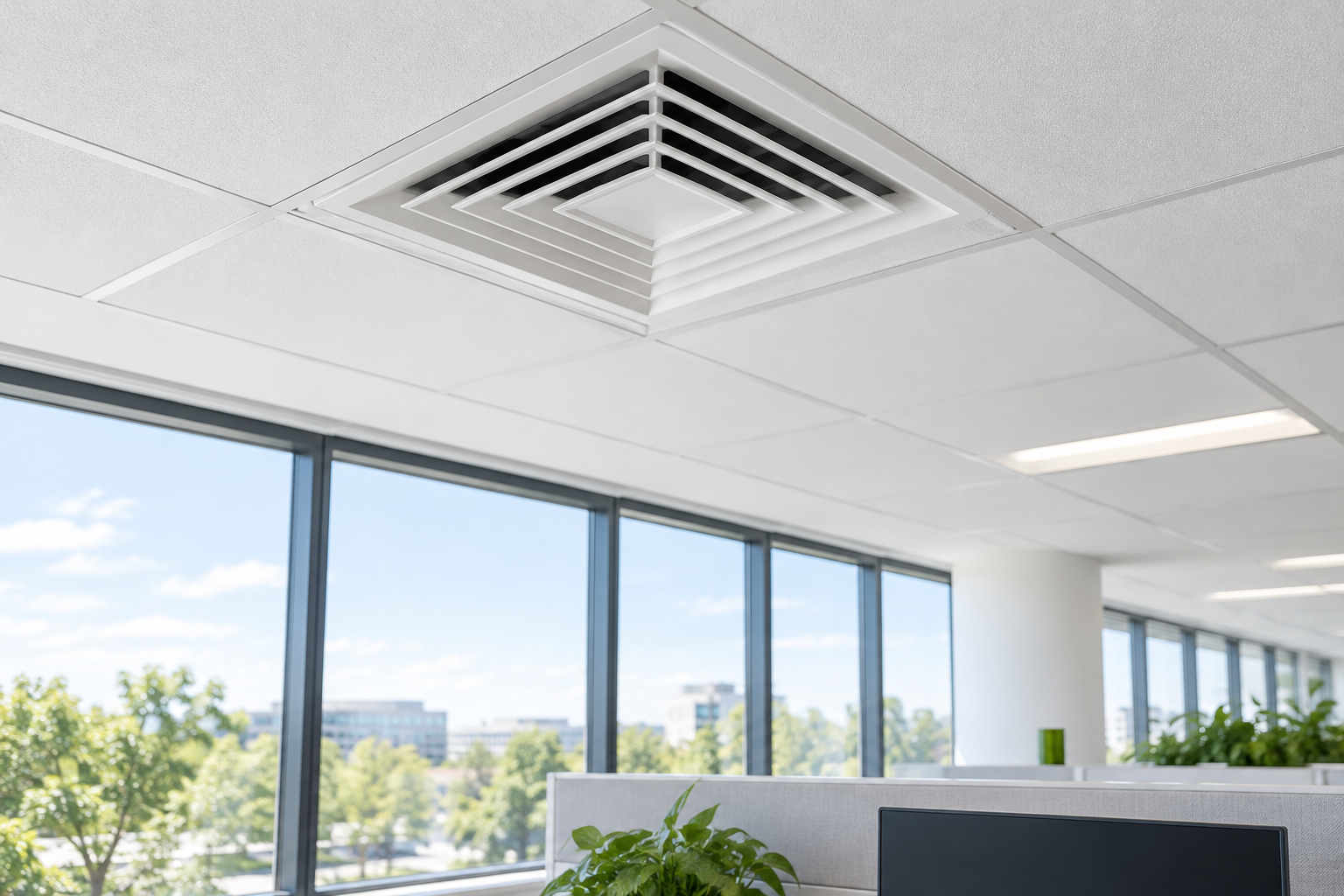
EPA’s office guidance explains that outdoor-air supply, air distribution and HVAC maintenance matter. Cleaning does not perform those functions. A team can report an obstructed grille; wiping it does not establish adequate ventilation.
Moisture needs the same division of responsibilities. CCOHS mould guidance identifies moisture as central to growth, including leaks, flooding and excess humidity. Removing contamination without addressing the source does not resolve the underlying condition.
Persistent dampness, recurring staining or suspected mould should trigger a building-management response. They should not simply become another routine dusting task. Appropriate assessment determines what remediation, maintenance and occupancy precautions are needed.
Translate the guidance into an office plan
Define the scope. Identify entrances, flooring, accessible ledges, shared areas and waste points. Record routine tasks and those needing periodic access. Arelli’s office-cleaning information can start that discussion.
Review products and application. Ask for the proposed products and relevant instructions. Check whether an odour complaint coincides with a task or application time. Do not assume that changing one product solves every complaint.
Assign building responsibilities. Clarify who handles ventilation checks, filters, leaks and persistent concerns. The cleaning team should know where to report conditions outside its scope.
Set escalation conditions. Recurring complaints, water damage or suspected ventilation faults warrant assessment, not repeated increases in chemical use. Document who receives the report and who decides the next action.
These are management recommendations derived from guidance—not a validated formula guaranteeing an air-quality outcome.
Evaluate progress without overclaiming
Start with records: where dust accumulates, which tasks were completed, when complaints occur and what other building changes happened. Separate accessible soil-removal results from building-system observations.
If testing is warranted, define the question before commissioning it. A comparison should account for occupancy, ventilation operation, outdoor conditions and cleaning timing. Otherwise a change in readings may be difficult to attribute.
Complaint tracking can identify patterns, but fewer complaints alone do not prove a specific health benefit. Persistent complaints should not be dismissed because surfaces look clean either.
The defensible conclusion is modest: cleaning contributes to source control within a broader programme. It does not guarantee a healthy building or replace competent investigation. Request an Arelli quote describing the workspace, cleaning arrangements and concerns needing coordination with building management.