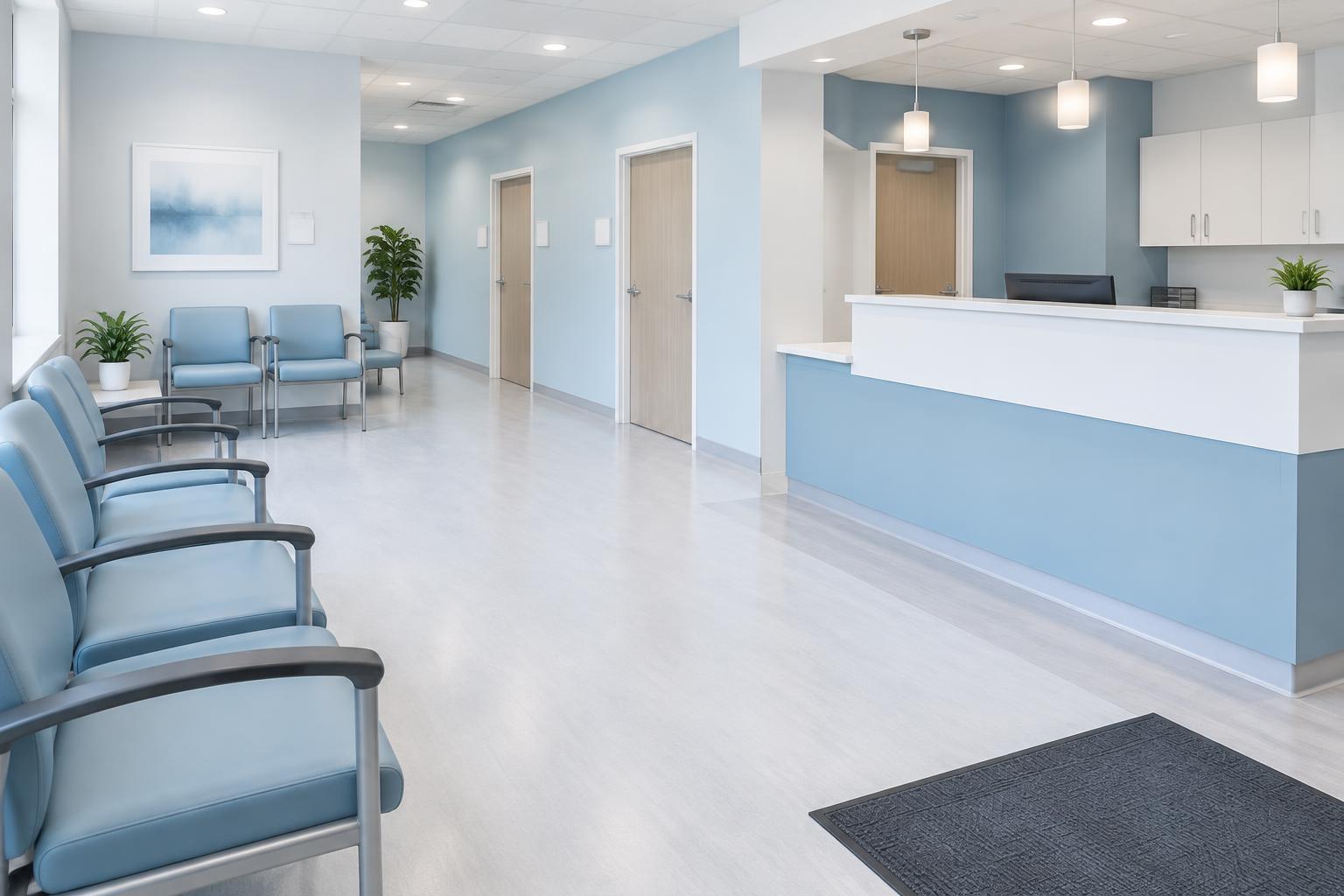
Medical office cleaning in Toronto needs a written, area-specific plan that identifies high-touch surfaces, sets cleaning and disinfection frequencies, and assigns responsibility between clinic staff and the cleaning provider. Reception and waiting-area high-touch surfaces need at least daily cleaning and disinfection, while shared non-critical medical equipment needs attention between uses according to applicable guidance and manufacturer instructions. After-hours cleaning supports that plan; it does not replace the clinic’s between-patient procedures.
Key takeaways
- Identify frequently touched surfaces by observing how patients and staff actually use the clinic.
- Separate scheduled environmental cleaning from between-use equipment cleaning and clinical responsibilities.
- Put methods, products, contact times, responsibilities and escalation steps in writing, including contracted work.
- Compare quotes against the same scope, not simply the same floor area.
- Treat Ontario professional expectations and public-health guidance accurately—not as a separate Toronto cleaning bylaw.
What Ontario expectations mean for a Toronto clinic
A tidy waiting room is not evidence that a clinic has a complete cleaning process. The important questions are whether the correct surfaces were cleaned and disinfected, whether the method was appropriate, and whether someone was responsible for completing and checking the work.
The CPSO policy on infection prevention and control for clinical office practice, approved in September 2024, requires physicians to ensure routine, consistent environmental cleaning and disinfection appropriate to the setting. Physicians in leadership positions must ensure documented IPAC policies, periodic staff review, training, responsibilities defined in writing, and ongoing monitoring and improvement.
These are Ontario professional regulatory expectations for office-based physicians, including those practising in Toronto. They are not a Toronto cleaning bylaw or a standalone statute governing cleaning contractors. Additional expectations apply to out-of-hospital premises.
For a clinic manager, the practical implication is straightforward: a cleaning contract should support the clinic’s IPAC procedures, not sit separately from them. When assessing Healthcare & Wellness cleaning services, ask how the provider’s task list will align with your clinic’s approved procedures and staff responsibilities.
Map high-touch areas before setting the schedule
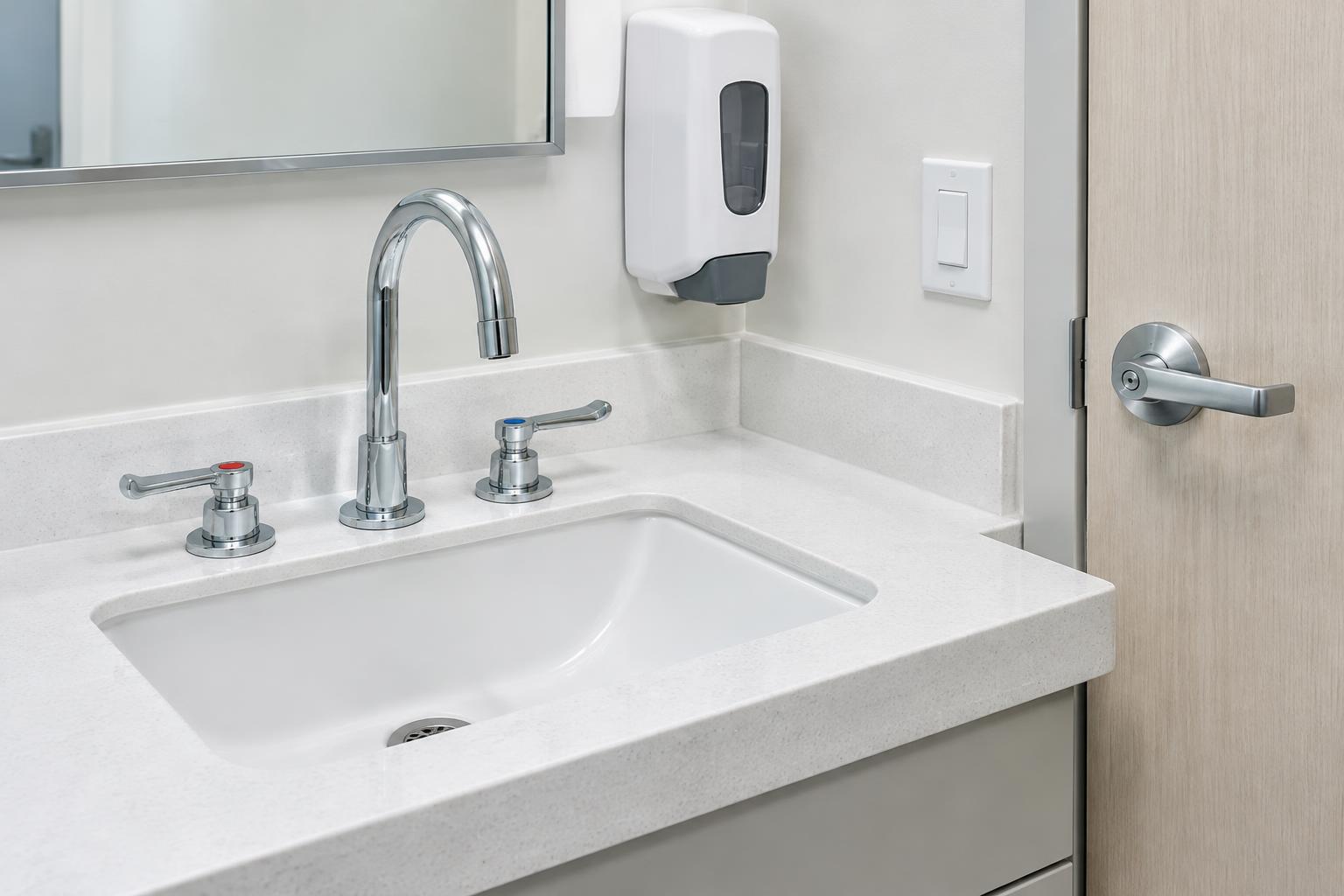
Start at the patient entrance and walk the route through reception, the waiting room, washrooms and examination rooms. Include staff-only spaces: shared keyboards, break-room handles and staff entrance controls can be missed when the checklist focuses only on patient areas.
“High-touch” describes frequency of contact, not visible dirt. A clean-looking door handle may need attention more often than an obviously dusty shelf.
Use this table as a planning framework, then have the clinic’s IPAC lead confirm the site-specific schedule and methods.
| Area or item | What to include | Frequency or trigger | Responsibility to document |
|---|---|---|---|
| Reception, waiting rooms and hallways | Door handles, chair arms, service counters, switches and handrails | At least daily cleaning and disinfection; add attention according to use, soiling and clinic risk assessment | Scheduled cleaning provider, with daytime tasks assigned where needed |
| Shared non-critical medical equipment | Exam tables, blood-pressure cuffs, stethoscopes and baby scales | Between uses, following equipment and product instructions | Trained clinic staff or another explicitly assigned, trained role |
| Washrooms | Flush controls, taps, locks, grab bars and dispensers | Scheduled cleaning and disinfection, plus checks and response based on use and soiling | Provider for scheduled work; named daytime coverage |
| Shared staff touchpoints | Door handles, appliance handles, keypads and compatible device surfaces | Include in the high-touch schedule; adjust to use | Clinic staff and provider, with boundaries specified |
| Entrance flooring and mats | Tracked-in moisture, grit and winter salt | Scheduled floor care plus prompt response to slip hazards | Clarify landlord, clinic and provider responsibilities |
| Blood or body-fluid spills | Affected surfaces and materials | Prompt response under the clinic’s written spill procedure | Specifically trained and designated personnel |
The Public Health Ontario clinical-office core-elements checklist, second edition March 2024, addresses written procedures for each area, including contracted cleaning, and written blood-and-body-fluid spill procedures. It identifies at least daily cleaning and disinfection of high-touch surfaces in reception, waiting rooms and hallways, and between-use cleaning and low-level disinfection for specified non-critical items.
This checklist supports Ontario inspections and self-assessment; it does not replace legislation. Its recommendations and assessment categories should not all be described as statutory duties.
Write procedures that someone can actually follow
“Disinfect exam rooms” is too vague to guide work or resolve a missed task. A useful procedure tells the assigned person exactly what is included, which method is approved, and what to do when completion is not possible.
Build an area-specific procedure
For each room or zone, record:
- Scope: Named surfaces and items, including exclusions.
- Timing: Scheduled frequency and additional triggers, such as visible soiling or changed clinic precautions.
- Ownership: Who performs the task and who provides backup.
- Method: The clinic-approved cleaning sequence, tools and precautions to prevent cross-contamination.
- Product: Approved cleaner or disinfectant, preparation requirements where applicable, and surface compatibility.
- Contact time: How long the surface must remain wet, according to the disinfectant’s instructions.
- Safety: Required protective equipment, handling precautions and access restrictions.
- Verification: How completion, missed tasks and corrective action are recorded.
Public Health Ontario’s key elements of environmental cleaning in healthcare settings, with the relevant section dated January 2025, identifies touchpoints such as doorknobs, switches, toilet handles, handrails and keypads. It recommends at least daily cleaning and disinfection, more frequent attention in outbreak areas, and cleaning and disinfection of shared non-critical medical equipment after each use.
That document is Ontario healthcare guidance, not legislation or a Toronto-specific rule. It also reinforces a crucial operational detail: surfaces must stay wet for the product’s required contact time. Its three-minute example is not a universal requirement.
Make the instructions accessible
Keep the current approved procedure where authorised staff can access it, with a revision date and a named person responsible for updates. Review changes with the people doing the work rather than assuming an updated document will be noticed.
Avoid vague product instructions such as “use the green spray.” Products can change, and colour does not establish suitability. Never mix cleaning chemicals; follow product labels and equipment manufacturer instructions.
Close the gap between clinic staff and the evening crew
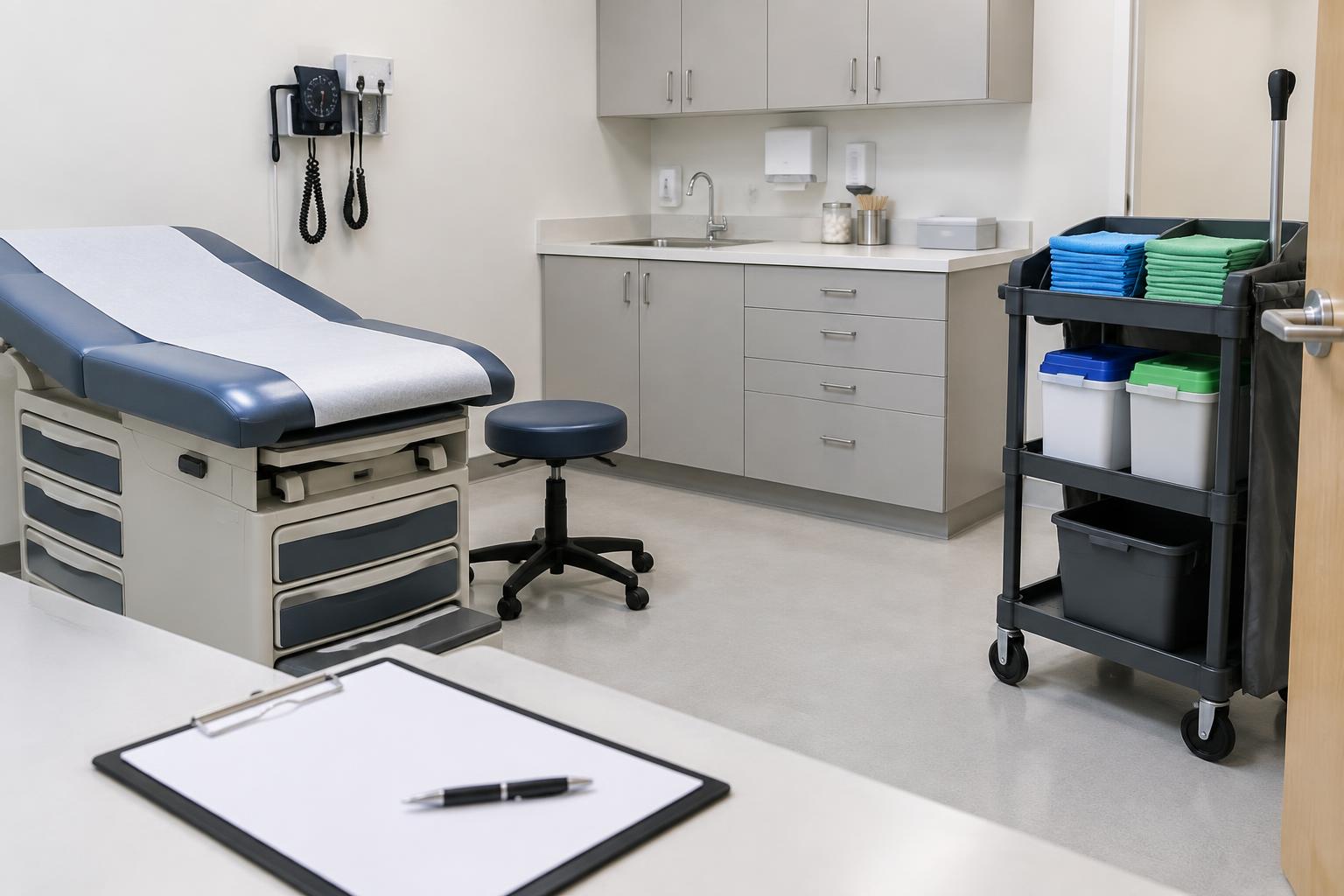
The most common operational weakness is an unassigned task. Clinic staff assume the contractor cleans an item; the contractor assumes it belongs to clinical staff.
A written handover should distinguish these workstreams:
- Between-patient work: Shared non-critical equipment and patient-contact surfaces assigned under clinic procedures.
- Scheduled environmental cleaning: Agreed floors, washrooms, reception areas, accessible surfaces and waste tasks.
- Exceptions: Spills, sharps, isolation precautions, damaged surfaces or inaccessible rooms requiring a separate response.
Do not assume routine commercial cleaning includes instrument reprocessing, sharps handling, biomedical waste management or every clinical spill. These need explicit responsibilities, suitable procedures and appropriately trained personnel. A cleaner who discovers an unexpected sharp should follow the site’s escalation procedure, not improvise its removal.
For Toronto clinics in multi-tenant buildings, also establish where the landlord’s work ends. Shared corridors, lift buttons and building washrooms may sit outside the clinic’s contract. Confirm ownership rather than letting the lease boundary become a cleaning gap.
Winter needs another handover: who checks saturated entrance mats and tracked-in slush while appointments are underway? Evening floor care cannot address a daytime slip hazard as it happens.
Match service to appointments, access and cost
A reliable quote starts with a walkthrough and a written scope. Floor area matters, but a clinic with frequent patient turnover, multiple washrooms and substantial between-use requirements is not equivalent to an administrative office of the same size.
Key cost drivers include square footage, service frequency, traffic, washroom count, flooring and special requirements. Access windows and the division between daytime clinic tasks and contracted work also affect how the service is organised. Use Arelli’s cleaning pricing guidance to understand the drivers, then request a clinic-specific assessment rather than treating office pricing as a medical-office quote.
Hybrid administration does not automatically justify reducing the clinical schedule. Base the plan on actual patient activity and room use, not only on how many administrative staff are onsite. Conversely, genuinely unused rooms can be identified separately so the scope reflects operations.
For periodic floor restoration or other work beyond the routine scope, discuss specialty cleaning services separately. Keep occasional project work from obscuring the daily responsibilities that matter most.
Choose a provider by the process, not the promises
Ask prospective providers to explain how they would handle a missed room, an unfamiliar disinfectant or a surface that cannot tolerate the proposed product. Practical answers reveal more than broad claims about “hospital-grade” cleaning.
Look for:
- A room-by-room scope with clear inclusions and exclusions.
- Training and supervision appropriate to assigned tasks.
- Product instructions that can be reconciled with clinic equipment requirements.
- A process for access, keys, alarms and patient confidentiality.
- A named contact and a documented way to resolve concerns.
Sustainability belongs in this discussion, but “green” is not proof of disinfection performance. Consider lower-waste dispensing, appropriate reusable materials and suitable products where they meet the clinic’s requirements. Do not substitute a general-purpose cleaner for an approved disinfectant simply because its environmental claims are appealing.
Arelli provides local crews, not a franchise, with 24/7 client support and an app for reporting concerns and following up. Use Client Care channels to report specific locations and tasks without including patient information. The clinic should still maintain its own required clinical and IPAC records.
Frequently asked questions
How often should a Toronto medical office be cleaned?
Set the schedule by area, patient activity and the clinic’s IPAC procedures. Ontario clinical-office guidance identifies at least daily cleaning and disinfection for reception, waiting-room and hallway high-touch surfaces, with additional attention according to risk and conditions. Shared non-critical medical equipment needs cleaning and disinfection between uses under applicable instructions.
Is after-hours cleaning enough for a medical clinic?
Not by itself where equipment and patient-contact surfaces require between-use attention. After-hours service provides the scheduled environmental reset, while assigned personnel handle daytime clinical cleaning, spills and other immediate needs.
What should a medical office cleaning contract include?
Include an area-specific task list, frequencies, approved methods, responsibilities, access arrangements and a process for missed work. State exclusions explicitly, especially for instrument reprocessing, sharps, biomedical waste and spill response. Align the contract with the clinic’s written IPAC procedures.
How much does medical office cleaning in Toronto cost?
Cost depends on square footage, frequency, traffic, washrooms, flooring and special requirements. Ask providers to quote against the same written scope and identify separately priced work. A lower quote is not directly comparable if it leaves important tasks unassigned.
Can a clinic use environmentally preferable cleaning products?
Yes, where the selected products meet the task’s cleaning or disinfection requirements and are compatible with the surfaces involved. Environmental claims do not establish disinfectant effectiveness or replace label instructions. The clinic should approve substitutions before use.
Does hiring a cleaning company transfer the physician’s IPAC responsibilities?
No; contracting out cleaning does not remove the professional expectations described in CPSO policy. The clinic still needs appropriate procedures, assigned responsibilities, training and monitoring. A provider should support that framework with a clearly defined service scope.
Get a free sample clean
Explore Arelli’s Healthcare & Wellness cleaning and discuss a scope that fits your Toronto clinic’s written procedures. Book a free 45-minute sample clean before you commit, and agree on a suitable area and approved methods in advance.
Arelli service for this topic
Commercial Cleaning in Toronto