
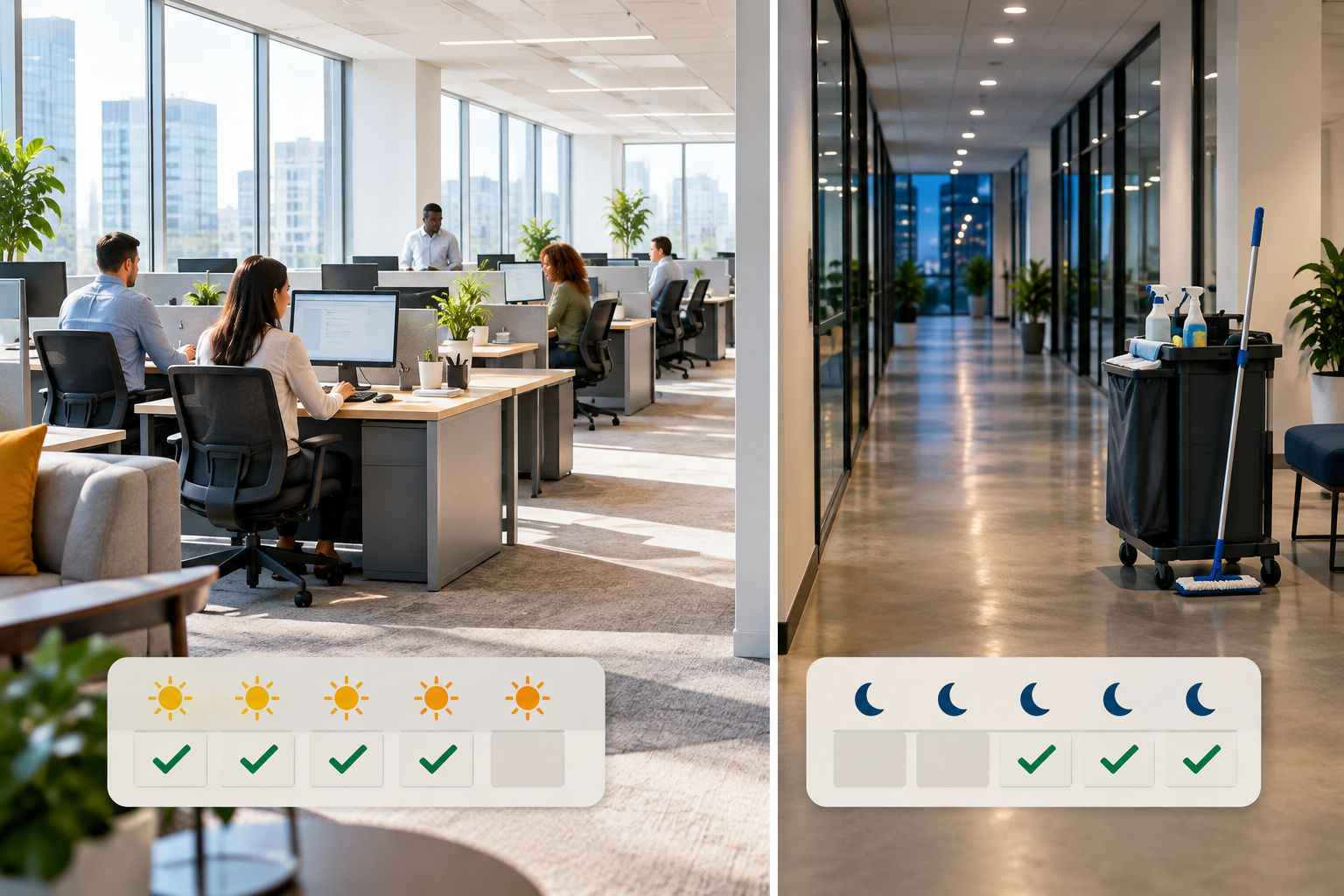
Choosing an office cleaning schedule is not simply a question of how many people work in the building. A lightly occupied office can still have a heavily used kitchen, while a larger workplace may have rooms sitting empty on certain days.
The better question is: Which areas need attention, how quickly do their conditions deteriorate, and who handles problems between cleaning visits? Daily and three-times-a-week service can both be reasonable choices. Neither is automatically suitable for every office.
Define “daily” before comparing proposals
For a Monday-to-Friday workplace, daily cleaning often means service on each operating day—not seven days a week. If your office opens on weekends, operates evening shifts or hosts occasional events, spell that out.
Three-times-a-week service also needs a calendar. Monday, Wednesday and Friday visits create different gaps from three consecutive service days. Ask providers to show the visit days and the tasks performed at each visit. A proposal saying “daily cleaning” may still schedule detailed dusting less frequently.
Arelli’s office cleaning services offer a starting point for discussing the spaces and tasks you need covered.

Start with the busiest spaces
Walk through near the end of an occupied day. Look at washrooms, kitchen counters, food-waste bins, entrances and shared meeting rooms before quieter desks. Record supplies running low, litter collecting, food residue, tracked-in moisture and bins approaching capacity.
CCOHS describes housekeeping as an ongoing operation, including waste removal and keeping floors and passageways free of hazards. That supports assigned responsibility throughout the day, regardless of contractor frequency.
Compare schedules by conditions, not headcount
This table is a planning tool, not a legal standard or guaranteed service specification. Its central distinction is whether acceptable conditions last until the next visit.
| Decision factor | Daily may fit better when… | Three visits may fit when… | Limitation |
|---|---|---|---|
| Occupancy | Most operating days bring activity across the office. | Attendance is intermittent and quiet days add little soil. | Check peak days, not averages. |
| Washrooms | Fixtures, floors or supplies need a reset each operating day. | Conditions last between visits, with assigned supply checks. | Restocking may still be needed on non-service days. |
| Kitchen and waste | Food residue and waste accumulate daily. | Food use is limited and someone manages waste between visits. | Spills cannot wait for scheduled service. |
| Entrances | Weather and traffic repeatedly bring moisture and grit. | Soil stays manageable through the gaps. | Winter may need temporary additional attention. |
| Meeting rooms | Meetings and visitors regularly leave marks or debris. | Rooms are used selectively and checked before bookings. | Match visits to actual use. |
| Daytime support | Routine needs repeatedly remain unmanaged. | A designated person handles checks and minor issues. | After-hours visits never replace immediate hazard response. |
When daily cleaning is the stronger option
Consider daily service when the office repeatedly becomes unacceptable before the next visit even though the previous clean was completed properly. Examples include recurring washroom soil, food debris after each occupied day or reception floors losing acceptable appearance before clients arrive.
More frequent attendance creates more opportunities to notice developing problems. It does not mean every surface needs the same treatment at every visit.
Separate routine cleaning from disinfection. CCOHS cleaning-staff guidance advises appropriate products, supplier instructions and cleaning before disinfecting. A daily contract should not automatically promise disinfection of every surface every day.
When three visits can work
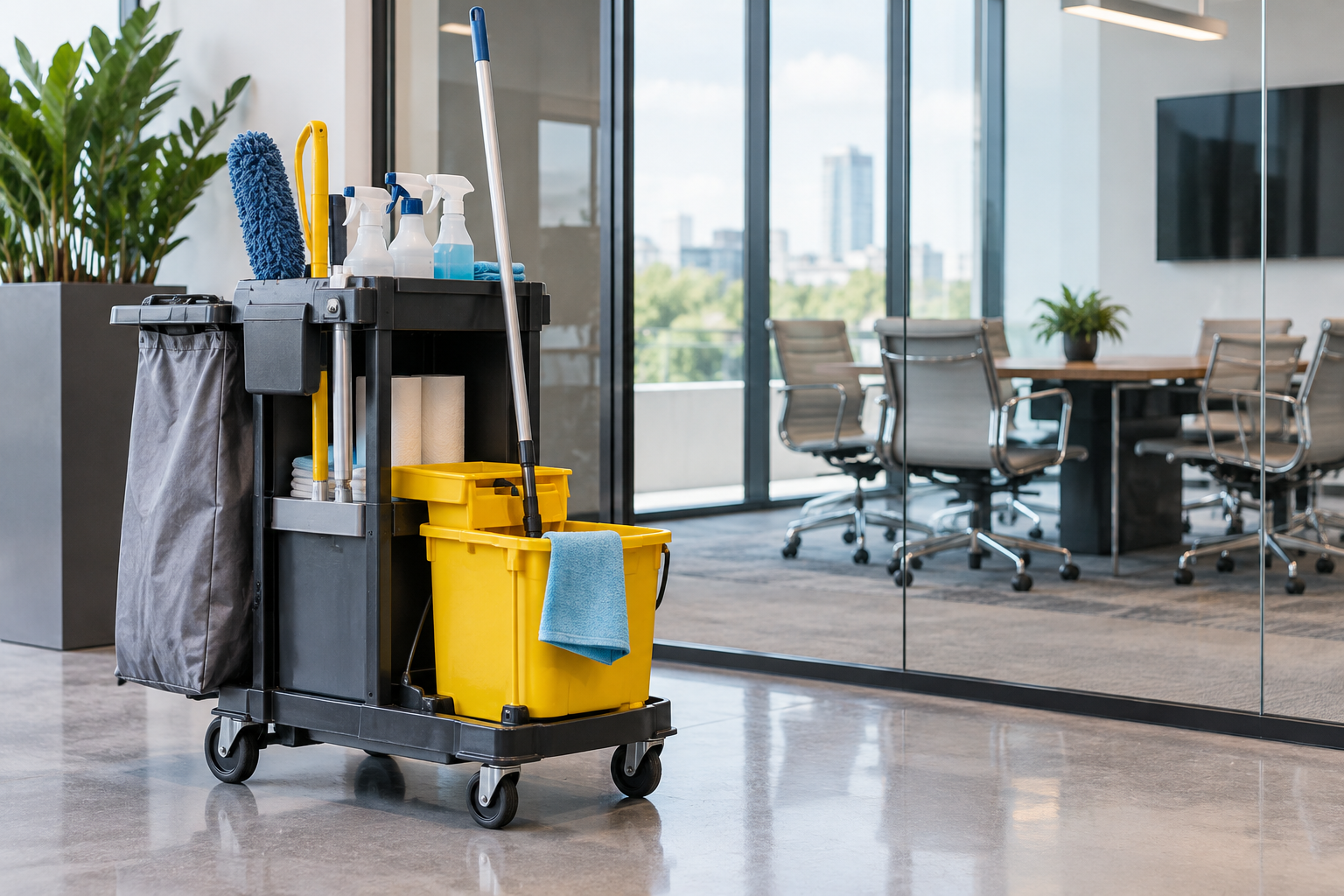
Three visits may suit uneven occupancy, limited visitor traffic and conditions that remain acceptable through the gaps. The arrangement needs explicit responsibilities: who checks supplies on Tuesday, removes food waste after an unscheduled lunch or reports a saturated mat?
Match visits to the busiest days rather than choosing a familiar calendar automatically. If attendance peaks Tuesday through Thursday, discuss when cleaning best resets the space. A reduced visit schedule works only when omitted days do not become unmanaged days.
Do not confuse frequency with quality
If crumbs remain under an accessible meeting table immediately after cleaning, ask whether the agreed task was completed—not whether another weekly visit is needed. If the room passes inspection but deteriorates after several meetings, timing, use or daytime support may be the issue.
Separate cleaning from maintenance too. A leaking fixture will not be resolved by adding a visit. A broader commercial cleaning scope can organize responsibilities across different spaces without treating every zone identically.
Test the longest gap and review exceptions
Agree on a representative trial including busy days and the longest interval between visits. Record conditions after service and before the next visit, supply shortages, waste issues, unusual attendance and work handled internally.
Treat hazards separately. CCOHS slip-and-trip guidance recommends immediate spill cleanup and marking wet areas. Neither schedule is a reason to postpone that response. Clinical spaces and body-fluid incidents require appropriate specialized procedures.
Choose the lowest visit frequency that consistently supports agreed conditions with clear coverage between visits. Request a quote with operating days, busy areas, current problems and service windows—not just floor area. That creates a comparison based on a usable plan rather than a label.